
Can I Use My EE Phone in Europe?
If you’re asking can I use my EE phone in Europe, the short answer is usually yes — but the real question is what it will cost and what your EE plan actually includes. That matters because roaming rules can vary depending on your contract, your destination, and whether you’re on pay monthly or pay as you go.
For many UK travellers, the simplest way to avoid bill shock is to compare EE roaming with a travel eSIM before you go. If you want predictable data costs across Europe, Roamzy’s Europe eSIM is a practical alternative, especially for airport arrivals, Google Maps, messaging, train travel, and hotel check-ins.
Quick answer: your EE phone should usually work in European destinations that EE supports, but roaming charges, allowances, and fair use limits depend on your current plan. Always check EE’s latest roaming terms before departure.
Can I Use My EE Phone in Europe?
In most cases, yes. If your EE handset is unlocked and your plan supports roaming in Europe, you should be able to use your phone for data, calls, and texts while travelling.
The important detail is not just whether the phone works, but whether your EE plan includes Europe roaming and at what cost. Some travellers assume “Europe” automatically means free roaming, but that is not something to rely on without checking your specific plan.
Will my EE phone work in EU countries?
Usually, yes — but the exact countries included may depend on EE’s current roaming zones and the terms attached to your plan. The EU, EEA, and other nearby destinations are not always treated the same way by mobile providers, so it’s worth verifying the destination list before you travel.
Does roaming depend on my EE plan?
Yes. That’s the part many travellers miss. Roaming conditions can differ between:
- Pay monthly and pay as you go customers
- Older and newer contracts
- Plans with roaming add-ons
- Destinations inside or outside EE’s Europe coverage
If you’re not sure which rules apply to you, check your EE app, contract documents, or EE’s roaming pages before you leave the UK.
How EE Roaming Works in Europe
Roaming means your phone connects to a partner network in the country you’re visiting. From the traveller’s perspective, it feels like using your normal UK mobile service abroad — but the billing rules can be very different.
That means you may be able to:
- Use mobile data for maps, email, WhatsApp, and browsing
- Make and receive calls
- Send SMS messages
- Use verification codes from banks and travel apps
However, each of those services may be charged differently, capped, or subject to fair use limits depending on your EE plan.
What’s included in my allowance?
Some EE plans include roaming allowances, while others may charge extra for usage abroad. In practical terms, the key things to check are:
- Whether Europe roaming is included
- How much data you get abroad
- Whether calls and texts are included
- Any daily or monthly roaming limits
For short trips, the included allowance may be enough for messaging and navigation. For longer trips, work travel, or family travel with lots of video streaming, it may run out quickly.
Are there fair use limits?
Very often, yes. A fair use policy is designed to prevent unlimited-style behaviour abroad from being used in a way that exceeds what the plan is intended for. That might mean:
- Data throttling after a limit
- Extra charges if you use too much
- Restrictions on sustained roaming use
If you’re travelling for work, slow Wi-Fi in hotels can make roaming data more important than you expect. Check the fair use details before relying on EE as your main connection.
Which countries are covered?
This is one of the most important checks to make. “Europe” can mean different things depending on the plan and the provider, so don’t assume every destination is covered on the same terms.
Before departure, confirm whether your destination is included in EE’s Europe roaming zone. If your trip includes multiple countries, especially outside the usual EU route, your roaming cost may change from one border to the next.
For current information, check EE’s official roaming pages here: EE roaming costs and destination information.
Will I Be Charged for Using EE in Europe?
Possibly. Some travellers will have roaming included on their plan, while others may face extra charges. The only safe answer is to check your current EE terms before travel.
The main cost triggers are usually:
- Using mobile data without an included roaming allowance
- Exceeding an allowance or fair use limit
- Calling or texting from a destination not covered by your plan
- Roaming in non-standard European destinations
When roaming is free vs paid
Some plans include roaming benefits as part of the package. Others do not. That means two EE customers travelling to the same city can end up with very different bills.
If your EE plan includes Europe roaming, you may still need to watch for allowance limits. If it does not, your usage may be billed at roaming rates or require an add-on.
What charges may apply
Depending on your plan, charges may apply to:
- Mobile data
- Voice calls
- Text messages
- Calls to voicemail
- Using your phone outside the covered zone
That’s why travellers often use a travel eSIM for data and keep EE available for calls or text verification where needed.
How to check before you travel
Before you leave, do these three checks:
- Open your EE account or app and review roaming terms
- Confirm your destination is included in your Europe roaming zone
- Check whether data, calls, and texts are covered or charged separately
If anything is unclear, contact EE support before your trip. That is much easier than trying to sort out a bill after you get home.
How to Avoid Unexpected EE Roaming Costs
If you want to use your EE phone in Europe without surprises, a little preparation goes a long way.
Check your plan before departure
Don’t rely on old assumptions or advice from previous years. Roaming terms can change, and post-Brexit roaming rules have made many UK travellers much more careful about checking the details.
Turn off data roaming when needed
If you want to avoid accidental charges, switch off data roaming until you know exactly what your plan includes. This is especially useful if your phone may connect in the background while you’re waiting at the airport or crossing a border.
Use Wi‑Fi or a travel eSIM
Hotel Wi‑Fi can work for some tasks, but it’s not ideal for navigation, ride-hailing, translation, or banking apps. A travel eSIM gives you mobile data without depending on EE roaming rates.
For many trips, that makes a Europe eSIM a better fit than traditional roaming, especially if you want:
- Predictable costs
- Easy setup before departure
- Data across multiple European countries
- Less risk of surprise billing
Recommended for Europe travel: Roamzy’s Europe eSIM is a simple way to get set up before you fly, so you can land, switch on data, and get on with the trip.
Is a Travel eSIM a Better Option Than EE Roaming?
Often, yes — especially if you care about cost control, heavy data use, or multi-country travel. EE roaming can be convenient, but convenience does not always mean value.
| Option | Best for | Pros | Watch out for |
|---|---|---|---|
| EE roaming | Travellers who want to keep their UK number active | Simple, familiar, may include calls/texts | Plan-dependent charges and fair use limits |
| Europe eSIM | Travellers who want predictable data costs | Easy setup, good for maps and messaging, often cheaper for data-heavy use | Usually data-only, so calls may need apps like WhatsApp |
When an eSIM may be better
A travel eSIM may suit you better if you:
- Are visiting several countries in one trip
- Use lots of mobile data for maps, socials, or work
- Want to avoid roaming bill shock
- Prefer to set everything up before departure
Who should consider an alternative
If you are a retiree travelling at a slower pace, a family juggling multiple phones, or a business traveller who needs reliable data on arrival, a travel eSIM can be a cleaner option than relying entirely on EE roaming. It also helps if you land late, need a taxi, or have to message someone straight away.
How Roamzy can help
Roamzy focuses on practical travel connectivity. If you want a Europe-focused data option without having to decode roaming terms every time you fly, browse the Europe eSIM and compare it with your current EE plan before you travel.
If your trip includes lots of streaming, hotspot use, or work calls over data apps, you may also want to look at a Unlimited Data Plan.
EE Phone Settings to Check Before You Fly
Before you head to the airport, check these settings on your phone:
- Data roaming — know whether it is on or off
- Mobile network selection — automatic usually works best
- App updates — stop large downloads until you have Wi‑Fi
- Banking apps — make sure you can receive verification codes
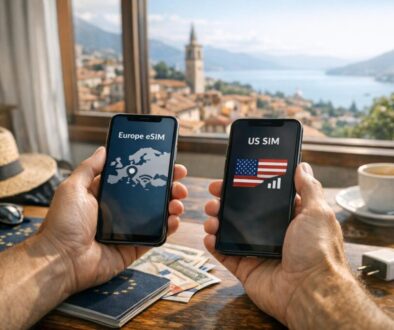
- Dual SIM settings — if you’re using an eSIM plus your EE line
If you use an iPhone or Android device with dual SIM support, it can be smart to keep EE active for texts while using a travel eSIM for data.
Practical Travel Examples
Here’s how this usually plays out in real travel situations:
- Airport arrival: you want data immediately for maps, rides, and messaging.
- Train travel: you need reliable coverage while moving between cities.
- Hotel check-in: you need to confirm bookings and access emails.
- Family travel: several devices may need data at once.
- Business travel: you may need hotspot access or quick file uploads.
In each of those cases, EE roaming might be fine — but a Europe eSIM often gives you more control over the cost.
If you’re also exploring on foot while travelling, you may enjoy Walkables – Immersive Self Guide Audio Walking Tours From Around Europe as a useful companion for independent sightseeing.
💡 Roamzy Travel Tip™
Before you board, switch your phone to airplane mode, then manually turn on Wi‑Fi or your travel eSIM after you land. That helps prevent accidental roaming before you’ve checked your settings and gives you more control over when data starts running.
Helpful Sources to Check
Because roaming rules can change, it’s worth checking official sources before you travel:
Frequently Asked Questions
Can I use my EE phone in Europe after Brexit?
Usually yes, but post-Brexit roaming rules are not the same for every EE plan. Check your current roaming terms before you travel.
Do I need to change settings on my phone?
Usually you should check data roaming, network selection, and dual SIM settings. If you use a travel eSIM, make sure the correct line is being used for data.
Can I use data, calls, and texts abroad?
Often yes, but availability and charges depend on your plan and destination. Data may be included, capped, or charged separately.
What happens if I go over my allowance?
You may be charged extra or experience reduced speeds, depending on your EE plan. Check the terms in advance so you know what to expect.
Is EE roaming better than a travel eSIM?
EE roaming is convenient if your plan includes Europe and you want to keep everything on one SIM. A travel eSIM is often better for predictable data costs and multi-country trips.
Will my EE SIM still receive bank codes in Europe?
Usually yes, if your phone stays connected to your EE line for SMS. If you switch your EE line off completely, check how your banking app handles verification.
Can I use a travel eSIM and my EE SIM together?
Yes, on many dual SIM phones you can use EE for calls or texts and a travel eSIM for data. That is a common setup for UK travellers.
Final Thoughts
So, can I use my EE phone in Europe? In most cases, yes. But the more important question is whether your EE plan includes the right roaming cover for your trip, and whether that cover is actually good value.
If you only need light use, EE roaming may be enough. If you want more predictable costs, easier setup, or better value for multi-country travel, a Europe eSIM is worth considering. For heavier usage, an Unlimited Data Plan may suit you better.
Check your EE terms before you fly, compare your options, and choose the setup that keeps you connected without the bill shock.