Best eSIM for a European Road Trip in 2026: What to Choose and Why
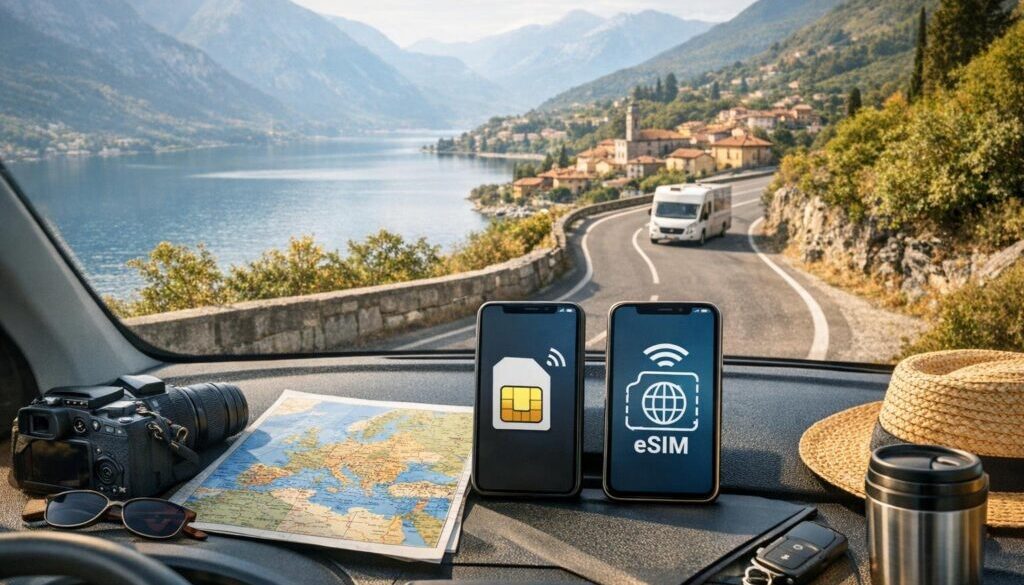
If you’re planning a European road trip, the best eSIM for a European road trip is usually the one that gives you simple multi-country coverage, enough data for navigation, and a plan that won’t surprise you at the border. That matters when you’re relying on Google Maps, booking apps, translation tools, and passenger hotspot use while moving between countries.
For most road trippers, a Roamzy Europe eSIM is the most practical starting point because it keeps your data plan in one place instead of forcing you to juggle local SIMs or expensive roaming. If your trip spans several countries, that convenience is often worth more than chasing the cheapest single-country option.

Quick answer: what is the best eSIM for a European road trip?
The best eSIM for a European road trip is a multi-country Europe eSIM that is easy to activate before departure, has enough data for navigation and travel apps, and works across the countries on your route without constant switching.
In plain terms, you want an eSIM that helps you:
- stay connected across borders
- use maps without worrying about roaming fees
- message family or travel companions easily
- share data with a passenger or a second device if needed
- avoid buying a new SIM in every country
What makes the best eSIM for a European road trip?
A road trip is different from a city break. You are not staying in one place, and you may cross several borders in a week. That means the best eSIM for a European road trip needs to be judged on convenience and continuity, not just headline price.
1. Multi-country coverage
The biggest advantage of a Europe travel eSIM is that it can cover multiple destinations in one plan. That is ideal if your route includes France, Italy, Spain, Germany, Austria, Croatia, or several other European countries. A single plan is much easier than managing separate local SIM cards.
2. Enough data for road-trip habits
Road trippers usually use more data than they expect. Navigation apps, music streaming, hotel bookings, WhatsApp, and restaurant searches all add up. The best eSIM for a European road trip should give you enough allowance for real travel use, not just emergency access.
3. Easy activation before you leave
The smoothest setup is the one you finish at home or at the airport before the trip starts. That way, when you land or cross into another country, you can turn on mobile data and get moving straight away.
4. Hotspot or tethering support
If one person in the car needs to connect a laptop, tablet, or second phone, hotspot support can be very useful. Not every traveller needs it, but families, couples, and remote workers often do.
5. Predictable pricing
European roaming can get expensive quickly, especially if you cross borders often. A travel eSIM gives you clearer upfront costs, which makes budgeting easier for long drives and flexible itineraries.
What to look for when choosing a Europe eSIM
If you are comparing options, use this checklist to narrow down the best eSIM for a European road trip.
| Feature | Why it matters on a road trip | What to check |
|---|---|---|
| Country coverage | Prevents border-by-border setup changes | Make sure your destinations are included |
| Data allowance | Maps, bookings, messages and music use data fast | Choose a plan that fits your trip length and habits |
| Validity period | Your plan should last the whole itinerary | Match the plan length to your road trip dates |
| Hotspot support | Helpful for passengers and secondary devices | Check whether tethering is included |
| Activation process | Simple setup saves time before departure | Look for QR code or app-based activation |
| Network quality | Coverage matters more on rural roads and smaller towns | Check the provider’s current network information |
For most travellers, the right answer is not the cheapest plan. It is the plan that stays usable when you move from city to motorway to mountain road without having to think about it.
How much data do you need for a European road trip?
Data needs vary, but road trips usually involve more navigation and fewer long streaming sessions than a normal holiday. That makes it easier to estimate than many travellers think.
Light usage
Light users mainly need maps, messaging, emails, and occasional bookings. If that sounds like you, a smaller plan may be enough for a short trip.
Moderate usage
Moderate usage includes daily navigation, social media, music streaming in the car, translation apps, and regular photo uploads. This is where many road trippers land.
Heavy usage
If you work on the road, share hotspot data, stream video, or travel with multiple devices, you will want a larger or unlimited plan. That can be more cost-effective than topping up repeatedly.
As a rough rule, the more people and devices in the car, the faster your data disappears. Families often underestimate this.
Why a regional Europe eSIM is usually better than local SIM cards
If you are taking a multi-country route, buying local SIM cards in every destination is usually more hassle than it is worth. A regional plan is often the better fit because it reduces friction.
- No SIM swapping: You keep one setup for the whole trip.
- No hunting for shops: You do not need to find a mobile store after arrival.
- Better for spontaneous routes: If you change plans mid-trip, your data still works in the next country.
- Cleaner budgeting: One prepaid plan is easier to manage than multiple purchases.
That is why the best eSIM for a European road trip is usually a Europe-wide plan rather than a single-country one.
Ready to Stay Connected?
Compare Roamzy’s Europe eSIM options and choose a plan that suits your trip.
What about countries like the UK, Switzerland, or Norway?
Some European itineraries include destinations that can sit outside standard EU roaming expectations. That is why you should always check exactly which countries are covered before you buy.
If your road trip includes the UK, Switzerland, Norway, or Iceland, confirm those destinations in the plan details rather than assuming they are included. The same advice applies to any route that crosses non-EU borders.
Best use cases for a road-trip eSIM
The best eSIM for a European road trip is the one that supports the way you actually travel. These are the most common use cases.
Navigation
Google Maps and Apple Maps are the obvious essentials. Even if you download offline maps, live data is still useful for traffic, route changes, fuel stops, and road closures.
Booking on the move
Road trips are flexible by nature. You may need to book a hotel late, find parking, reserve a ferry, or adjust a route. Mobile data makes that much easier.
Messaging and translation
Apps like WhatsApp and translation tools are especially useful when you are crossing borders, ordering food, or communicating with hosts.
Hotspot use
If your passengers want to connect tablets or laptops, hotspot capability can turn one eSIM into a more useful travel tool.
Backup for Wi-Fi dead zones
Hotel Wi-Fi is not always reliable. A travel eSIM gives you a cleaner fallback when a property’s internet is slow or unavailable.
How the best eSIM for a European road trip compares with roaming
Traditional roaming can work, but it is not always the most predictable option for a road trip. Roaming is often tied to your home carrier’s terms, and those terms may vary depending on country, allowance, or fair-use limits.
| Option | Best for | Main downside |
|---|---|---|
| Europe eSIM | Cross-border convenience and clear prepaid control | Must check coverage and plan rules before buying |
| Home carrier roaming | Travellers who want to keep their existing number active | Can be expensive or complicated across multiple countries |
| Local SIM cards | Single-country stays | Not practical for a multi-country road trip |
If you care most about simplicity, the best eSIM for a European road trip usually beats both roaming and local SIMs.
Recommended Roamzy option for European road trips
For travellers planning to drive across more than one country, Roamzy’s Europe eSIM is the most natural fit. It is designed for the kind of trip where you want one setup, one plan, and fewer things to think about after you hit the road.
This is especially useful for:
- couples touring multiple countries
- families sharing maps, bookings, and entertainment
- digital nomads moving between cities
- drivers who need reliable navigation day after day
- travellers who want to avoid roaming surprises
When you are comparing options, check the destinations, data amount, and validity period first. Then choose the plan that matches your route rather than your guess of what you might use.
Practical road-trip tips for using an eSIM in Europe
Here are a few habits that make the best eSIM for a European road trip work even better:
- Install it before you leave: Avoid setup stress after landing.
- Download offline maps: Useful in tunnels, remote areas, and weak-signal zones.
- Turn on data alerts: Helps you keep an eye on usage if your plan is limited.
- Keep your home SIM safe: If your phone supports dual SIM, leave your domestic line active for verification codes if needed.
- Check hotspot settings: Test them before the trip starts.
💡 Roamzy Travel Tip™: If your route crosses several borders in a short time, activate your Europe eSIM before you leave home and do a quick test with maps and messaging while you still have time to troubleshoot.
Ready to Stay Connected?
Compare Roamzy’s Europe eSIM options and choose a plan that suits your trip.
FAQs about the best eSIM for a European road trip
Will one eSIM work in multiple European countries?
Yes, if you choose a regional Europe eSIM that includes the countries on your itinerary. Always check the coverage list before buying.
Can I use hotspot with a travel eSIM?
Some travel eSIM plans support hotspot or tethering, but not all do. Check the plan details before purchase if you plan to connect other devices.
Is an eSIM better than roaming for a road trip?
For many travellers, yes. An eSIM is often easier to budget for and less stressful across borders, especially if you are driving through multiple countries.
Do I need a separate eSIM for the UK, Switzerland, or Norway?
Not always, but those countries may not be included in every European plan. Check coverage carefully if your route includes them.
When should I activate my eSIM?
Usually, the best time is just before departure or when you are ready to start using it. Follow the activation instructions provided with your plan.
How much data should I buy for a road trip?
It depends on how much you use maps, music, social apps, and hotspot. Light users need less, while families and remote workers usually need more.
Can I keep my regular phone number while using an eSIM?
Often yes, especially on dual-SIM phones. That can be handy if you still want to receive texts for banking or verification codes.
What is the biggest mistake travellers make with road-trip data?
The most common mistake is underestimating how much data navigation, streaming, and hotspot use can consume over several days of driving.
Final verdict: the best eSIM for a European road trip
The best eSIM for a European road trip is the one that keeps you connected across borders without adding stress to the journey. For most travellers, that means choosing a Europe-wide plan with enough data, clear validity, and the flexibility to handle maps, bookings, messaging, and the occasional hotspot session.
If you want a practical, travel-friendly option, Roamzy’s Europe eSIM is a strong place to start. It fits the way real road trips work: flexible routes, changing countries, and a constant need for reliable mobile data.
Before you buy, check your itinerary, confirm the countries included, and match the plan to your actual usage. That is the easiest way to choose the best eSIM for a European road trip in 2026.