Can I Use a Europe eSIM on a Cruise?
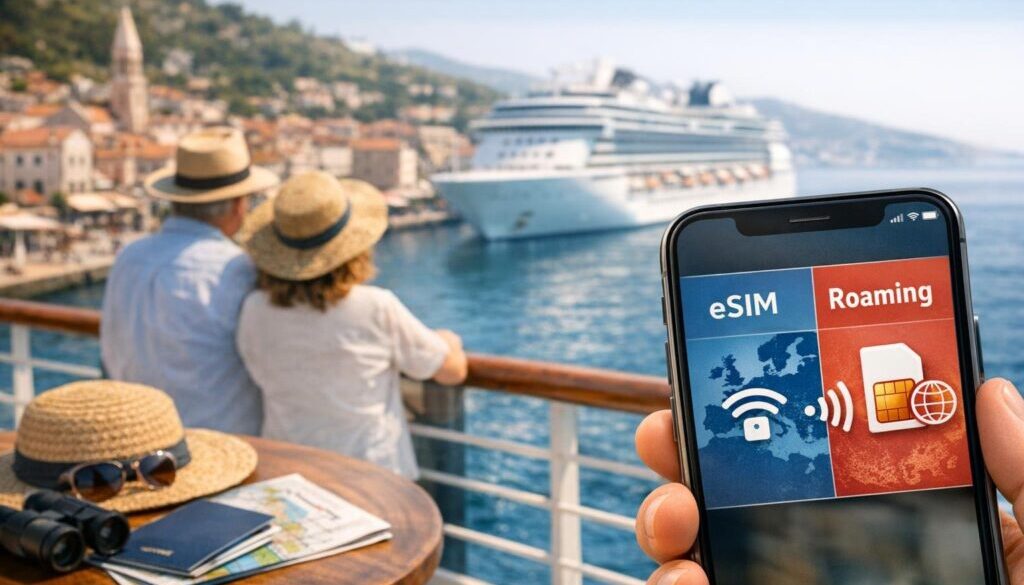
If you’re heading off on a European cruise, a Europe eSIM can be a very handy part of your connectivity plan — but it won’t behave the same way on the ship as it does in port. In simple terms, a Europe eSIM is usually useful on land, near shore, and during excursions, but it usually won’t replace onboard cruise Wi‑Fi or ship-specific internet at sea.
That matters because cruise travellers often get caught between three different connectivity situations: docked in port, moving close to the coastline, and sailing out in international waters. Knowing the difference can save you from surprise roaming charges and help you stay connected for maps, messaging, bank codes and tour updates.
For most travellers, the smartest option is to use a Europe eSIM for the parts of the trip where land-based mobile service is available, and rely on the ship’s Wi‑Fi or cruise connectivity options when you’re onboard. If you want a simple way to stay connected across European ports, is worth considering before you sail.

Quick Answer: Can I Use a Europe eSIM on a Cruise?
Yes, but only in the right places. A Europe eSIM can usually work when your cruise ship is docked in a European port, or when you’re on shore during an excursion. It usually will not work as a reliable internet solution while the ship is at sea.
The key thing to understand is that cruise ships are not the same as hotels or airports. Once you leave land-based mobile networks, your phone may lose service, switch networks, or connect in a way that triggers roaming charges. So the answer is not “yes” or “no” — it depends on where the ship is and what network is available.
How a Europe eSIM Works on a Cruise
A Europe eSIM is designed to connect your phone to mobile networks in supported European destinations. On a cruise, that means it can be useful whenever you are in range of a land-based network. The experience changes depending on whether you are in port, close to shore, or out at sea.
In European ports
This is where a Europe eSIM is most helpful. When your cruise ship docks, your phone can usually connect to local mobile networks in that country, provided your eSIM plan includes that destination and your phone is set up correctly. This is ideal for:
- checking port maps and shuttle details
- messaging family or travel companions
- using Google Maps on shore
- booking taxis, trains or last-minute tours
- looking up restaurant details while you’re ashore
If your itinerary includes several countries, a Europe eSIM is often more practical than buying separate plans for every stop.
Near the coastline
Coverage near the coast can be patchy. Sometimes your phone will still pick up a terrestrial mobile signal for a short distance from shore, but this depends on the route, the local network, your device and the ship’s position. It’s best not to assume stable service while the vessel is moving.
In practice, that means your eSIM may work briefly as you leave port or approach land, but the connection can change quickly. If you need reliable access for something important, do it while docked or on land.
In international waters or at sea
This is where most travellers run into trouble. Once the ship is far enough from shore, your phone usually won’t connect to normal land-based mobile towers. Cruise ships may use their own internet systems, often via Wi‑Fi or satellite-based services, but that is separate from your Europe eSIM.
So if you’re asking, can I use a Europe eSIM on a cruise while the ship is sailing? The practical answer is usually no, not in the way most travellers mean. You’ll normally need ship Wi‑Fi or another onboard option for internet at sea.
Ready to Stay Connected?
Compare Roamzy’s Europe eSIM options and choose a plan that suits your trip.
What a Europe eSIM Can and Can’t Do Onboard
It helps to separate “onboard” into two situations: the ship is docked, or the ship is sailing. The answer changes a lot depending on which one you’re in.
| Situation | Can a Europe eSIM work? | Best use case |
|---|---|---|
| Ship docked in port | Usually yes | Maps, messages, bookings, shore planning |
| Near the coast | Sometimes, but not always | Quick checks, short tasks, emergency use |
| Open sea / international waters | Usually no | Use cruise Wi‑Fi or ship internet instead |
Using data while the ship is docked
When the ship is in port, your phone is in the best position to use a Europe eSIM. This is when you can take advantage of local networks and avoid expensive international roaming from your home carrier.
It’s also the moment when travellers tend to use data the most: checking meeting points, translating signs, ordering transport, and uploading photos. If your cruise includes short port stops, having data ready before you disembark is a big plus.
Why coverage usually drops at sea
Mobile networks are built for land. Once the ship moves away from shore, land-based towers quickly become too distant. That’s why your Europe eSIM can’t be expected to provide normal mobile data across the ocean or even during many parts of a coastal sailing route.
Some phones may still show signal bars if they catch a network briefly, but that does not mean the connection will be stable enough for streaming, video calls or continuous browsing.
Roaming and maritime network risks
This is the part cruise passengers need to watch closely. If your phone loses the land network, it may try to connect to a different network or fall back to your home carrier if roaming is enabled. Depending on your settings and carrier, that can become expensive very quickly.
For that reason, a Europe eSIM should be paired with careful phone settings. Don’t assume your device will “do the right thing” automatically at sea.
Best Ways to Stay Connected on a Cruise
For European cruises, there usually isn’t just one perfect solution. Most travellers end up using a mix of options depending on where they are.
Cruise ship Wi‑Fi
Ship Wi‑Fi is usually the main onboard option. It can be convenient for basic messaging, browsing and email, although speeds and quality vary by cruise line, ship and package. It may also be the only realistic option once you’re well out at sea.
Check the cruise line’s current internet packages before you sail, especially if you need video calls or work access.
Shore-based mobile data with a Europe eSIM
This is where a Europe eSIM really shines. It gives you data in port without needing to rely on expensive roaming from your home carrier. It’s especially useful for travellers who like to explore independently rather than stay in the cruise terminal area.
If you’re doing multiple ports, a Europe eSIM can make the whole trip easier because you’re not constantly searching for local SIM cards or public Wi‑Fi.
Checking cruise line connectivity options
Some cruise lines offer their own internet packages or onboard communication apps. Others may have shipboard roaming arrangements or special partner services. These options vary widely, so it’s worth checking your cruise line’s official information before departure.
If you want a broader look at travel data options, see our guide on Europe eSIM plans and how they fit into multi-country travel.
How to Avoid Unexpected Charges
The biggest risk on a cruise is not usually the eSIM itself — it’s the wrong network or roaming setting at the wrong time. A few simple steps can help you avoid a nasty bill.
Disable roaming when needed
If you’re not intentionally using your home carrier at sea, it’s smart to switch off data roaming on the line you don’t want to use. This helps prevent your phone from reaching for an expensive fallback connection.
Use the right network at the right time
When you’re in port, use your Europe eSIM. When you’re sailing and the signal disappears, switch to the cruise ship’s Wi‑Fi or another onboard option if you need internet. That simple habit can save a lot of frustration.
Download maps and info before sailing
Before the ship leaves port, download:
- offline Google Maps areas
- boarding passes
- excursion confirmations
- hotel details for pre- or post-cruise stays
- translation packs and city notes
This is especially useful if you’re moving between countries and don’t want to depend on live data every minute.
Related reading: How to Avoid Roaming Charges Abroad, How Does an eSIM Work?, and eSIM vs Roaming: Which Is Better?
Is a Europe eSIM Worth It for a Cruise?
For many travellers, yes — but mainly for the parts of the trip that happen on land. If your cruise includes several European ports, a Europe eSIM can make arrival days, sightseeing, and transfer days much easier.
When it is worth buying
- You’re visiting multiple European ports
- You want data as soon as you step off the ship
- You rely on Google Maps, WhatsApp or ride apps
- You want to avoid buying separate SIMs in each country
- You prefer a setup that’s ready before departure
When another option may be better
- You only need internet while aboard the ship
- Your cruise line already includes a package that suits your needs
- You rarely use data in port
- You’re travelling somewhere outside the Europe eSIM coverage area
So, if you’re asking can I use a Europe eSIM on a cruise as your main internet solution, the answer is usually no. If you’re asking whether it’s useful for the European parts of the cruise, then yes — very often.
Recommended Roamzy Solution
If your cruise includes European ports, a Roamzy Europe eSIM is a practical way to stay connected on shore without depending on expensive roaming from home. It’s a good fit for travellers who want data ready before they leave the ship and don’t want to waste time hunting for Wi‑Fi in every port.
For the strongest experience, buy your eSIM before departure, install it while you still have stable Wi‑Fi, and test that your phone settings are ready. That way, when the ship docks, you can get online quickly and get on with the holiday.
Ready to Stay Connected?
Compare Roamzy’s Europe eSIM options and choose a plan that suits your trip.
💡 Roamzy Travel Tip™
Before your cruise leaves port, turn on your eSIM, confirm that mobile data is working on land, and then take a quick screenshot of your phone’s network settings. If anything changes later at sea, you’ll know exactly what was switched on before you sailed.
FAQ: Can I Use a Europe eSIM on a Cruise?
Will a Europe eSIM work while the ship is at sea?
Usually not. A Europe eSIM is built for land-based mobile networks, so it typically won’t provide normal service in open water.
Will it work in cruise ports?
Yes, usually. Ports are where a Europe eSIM is most useful because your phone can connect to local mobile networks.
Can I use it during shore excursions?
Yes, if you’re in a supported European country and the eSIM is active on your phone.
Do I still need cruise Wi‑Fi?
For onboard use, probably yes. Cruise Wi‑Fi is often the main option once you’re away from land.
How do I avoid accidental roaming charges on a cruise?
Check your roaming settings, know which line is active, and disable roaming on the line you don’t want to use at sea.
Should I buy the eSIM before I leave home?
Yes. Installing it before departure is easier than trying to set it up once you’re already onboard or in a busy port.
Is a Europe eSIM better than buying Wi‑Fi on the ship?
They solve different problems. A Europe eSIM is usually better for ports and excursions, while ship Wi‑Fi is for onboard use.
Conclusion
Can I use a Europe eSIM on a cruise? Yes — but mainly in European ports, near shore and during land-based parts of the trip. At sea, it usually won’t replace cruise Wi‑Fi or other onboard internet options.
For travellers who want data ready the moment they step off the ship, a Europe eSIM is one of the easiest ways to stay connected across multiple countries. Used alongside the right cruise connectivity option, it can make your trip simpler, safer and far less stressful.
If you’re planning a European cruise and want a straightforward way to stay online in port, start with a Roamzy Europe eSIM and keep your onboard connectivity separate.