Europe eSIM vs Local SIM Card: Which Is Better for US Travellers?
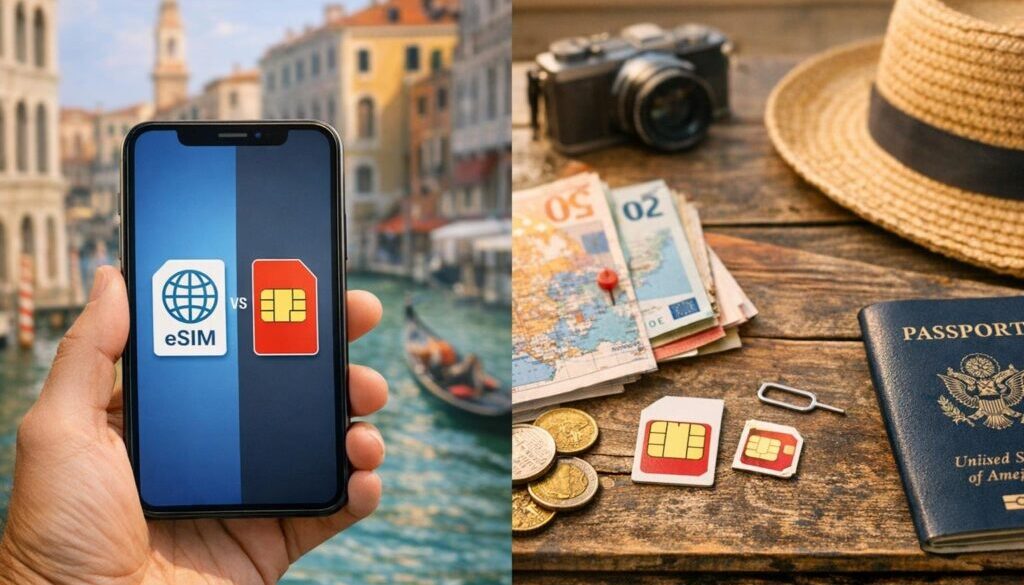
If you’re travelling from the US to Europe, the big question is simple: should you buy a Europe eSIM vs local SIM card for your trip? For most travellers, the answer comes down to convenience, trip length, and whether you’re visiting one country or several.
A Europe eSIM is usually the easier option if you want to land, switch on data, and get moving. A local SIM card can still make sense if you’re staying longer in one country or need a local number. If you want a pre-trip option that avoids airport kiosks and shop visits, Roamzy’s Europe eSIM is a practical place to start.

In this guide, we’ll compare Europe eSIM vs local SIM card side by side so you can choose the right option before you fly.
Quick answer: which is better?
For most US travellers, a Europe eSIM is the better choice. It’s faster to set up, works well for multi-country itineraries, and usually removes the stress of finding a SIM card after arrival.
A local SIM card is better if you’re staying in one country for a longer period, want a local phone number, or are happy to spend time buying and registering a SIM in person.
What’s the difference between a Europe eSIM and a local SIM card?
A Europe eSIM is a digital SIM that you install on a compatible phone. You usually buy it online, scan a QR code or use an app, and activate it before or after arrival depending on the provider.
A local SIM card is the physical plastic SIM you insert into your phone. You buy it in a shop, airport kiosk, mobile store, or sometimes online before travel.
How each one works for US travellers
- Europe eSIM: download before departure, set it up on your phone, and use mobile data when you land.
- Local SIM card: buy in the country you arrive in, replace your existing SIM, and follow the provider’s activation steps.
The biggest practical difference is time. With a Europe eSIM, you can be connected sooner and avoid one more task after a long flight.
Europe eSIM vs local SIM card: side-by-side comparison
| Factor | Europe eSIM | Local SIM card |
|---|---|---|
| Setup | Install before departure or on arrival | Buy and insert after arrival |
| Convenience | Very high | Lower, especially in the first hour after landing |
| Multi-country travel | Usually strong | Usually less convenient if you cross borders |
| Local number | Often data-only | More likely to include a local number |
| Phone compatibility | Requires eSIM-compatible, unlocked phone | Requires unlocked phone with physical SIM slot |
| Best for | Short trips, city breaks, multi-country itineraries | Longer stays in one country |
Setup and activation
This is where the Europe eSIM usually wins. You can arrange it before you leave the US, which means you are less dependent on airport Wi-Fi, shop opening hours, or finding the right mobile store after a long-haul flight.
Convenience while travelling
If your trip includes airport arrivals, train connections, hotel check-ins, Google Maps, rideshares, translation apps, and banking verification codes, convenience matters. A Europe eSIM lets you get online quickly, which is especially useful when you’re tired and just want the phone to work.
Cost and value
The cheapest option depends on the country, provider, and data allowance. A local SIM can sometimes look cheaper at first glance, but travellers should also factor in time, transport to a shop, possible registration requirements, and whether the plan works in more than one country.
A Europe eSIM may cost more than the absolute cheapest local SIM, but it can deliver better value if you want simplicity and cross-border use.
Coverage and network access
Coverage depends on the provider and the local network partner behind the service. Good Europe eSIM plans are designed for travellers and can work well across many destinations, while a local SIM is naturally focused on one country. If you are hopping between France, Italy, Spain, and Germany, a Europe eSIM is usually more practical.
Multi-country travel
This is one of the clearest advantages in the Europe eSIM vs local SIM card debate. A local SIM can become inconvenient as soon as you cross a border. You may need to buy another card, top up a new account, or deal with different registration rules.
For a trip that includes more than one country, a Europe eSIM is usually the smoother choice.
Phone compatibility
Before buying either option, check two things:
- Is your phone eSIM-compatible?
- Is your phone unlocked?
If your phone supports eSIM, that opens the door to a much easier setup. If it doesn’t, a local physical SIM card may be your fallback option, provided your phone is unlocked.
Local phone number vs data-only plans
Many travel eSIMs are data-only. That is fine for most travellers because apps like WhatsApp, FaceTime, Messenger, Google Maps, email, and Uber can all work on data. A local SIM is more likely to include a phone number, which can matter if you expect local calls or need a number for specific bookings or services.
Ready to Stay Connected?
Compare Roamzy’s Europe eSIM options and choose a plan that suits your trip.
When is a Europe eSIM the better option?
Short trips
If you’re heading to Europe for a week or two, the simplicity of an eSIM is hard to beat. You can set it up before departure and avoid wasting holiday time on mobile shop errands.
Multi-country itineraries
If your trip includes a few cities or countries, a Europe eSIM usually makes more sense than buying a different local SIM every time you move.
Travellers who want to set up before departure
Many US travellers prefer to land with one less thing to do. That is one of the main reasons a Europe eSIM is often the better fit.
Travellers who want to avoid airport kiosks or store visits
Not everyone wants to queue at a kiosk after a long flight. If you’d rather go straight to your hotel, train, or first sightseeing stop, an eSIM is the easier option.
When is a local SIM card the better option?
Longer stays in one country
If you’re staying several weeks or months in one destination, a local SIM may be worth considering. It can sometimes be a better fit for settled travel where you expect to use a lot of data in one place.
Travellers who need a local number
If you need a local number for work, bookings, deliveries, or regular calls within the country, a local SIM may be the more suitable choice.
Budget-conscious travellers willing to buy on arrival
If you are happy to shop around after landing, a local SIM card can sometimes offer strong value. Just remember to compare the total convenience, not only the sticker price.
What US travellers need to check before choosing
Is your phone eSIM-compatible?
Most newer phones support eSIM, but not all do. Check your device settings or your manufacturer’s support page before you buy.
Is your device unlocked?
An unlocked phone is important for both eSIMs and physical SIM cards. If your phone is locked to a US carrier, it may not accept another provider’s service.
Will you need calls and texts, or only data?
If you mainly use apps for communication, a data-only eSIM may be perfect. If you need a local number or traditional voice calling, a local SIM may offer more flexibility.
Are you visiting one country or several?
This is often the deciding factor in the Europe eSIM vs local SIM card decision. One country can work either way. Several countries usually favour the eSIM.
Which option is best for most US travellers to Europe?
For most US travellers, the best all-round option is a Europe eSIM. It is easier to prepare in advance, faster to activate, and much more convenient for multi-country travel.
A local SIM card still has a place, especially for longer stays in one country or if you need a local phone number. But if you’re trying to avoid hassle, the eSIM is usually the smarter travel choice.
If you want to compare plans now, Roamzy’s Europe eSIM range is designed for travellers who want a straightforward setup and reliable mobile data across Europe.
For current country coverage and travel data options, review official guidance from your device manufacturer and your carrier before departure, and check provider terms carefully.
Roamzy Travel Tip™
💡 Roamzy Travel Tip™: Set up your Europe eSIM before you leave the US, then keep your primary US SIM active for calls or bank verification texts if needed. That gives you a smooth landing while protecting access to important messages from home.
Ready to Stay Connected?
Compare Roamzy’s Europe eSIM options and choose a plan that suits your trip.
Related travel resources
- Europe eSIM plans
- Roamzy Connect home
- Walkables – Immersive Self Guide Audio Walking Tours From Around Europe
- Simple Automations – Automations for small business
- Apple eSIM support
- Google support on eSIM setup
- Rick Steves on SIM cards and phone use in Europe
FAQs
Is a Europe eSIM cheaper than a local SIM card?
Not always. A local SIM can sometimes be cheaper on paper, but a Europe eSIM may offer better value once you factor in convenience, time saved, and multi-country use.
Can I use a Europe eSIM on any US phone?
No. Your phone needs to be both eSIM-compatible and unlocked. Check your device settings or manufacturer support before buying.
Does a local SIM always include a phone number?
Often yes, but not always in the way you expect. Some plans are voice-and-data, while others are data-first. Always check the plan details before purchasing.
Is an eSIM good for travelling between European countries?
Yes, that is one of its strongest benefits. A Europe eSIM is usually much easier than switching physical SIMs every time you cross a border.
Should I buy a SIM card at the airport in Europe?
You can, but airport options are not always the best value or the most convenient. If you want to be ready on arrival, an eSIM is usually simpler.
Can I keep my US number while using a Europe eSIM?
In many cases, yes. Many travellers keep their US SIM active for calls and texts while using an eSIM for data. Check with your carrier and phone settings before travelling.
Which is better for a two-week Europe trip?
For a two-week trip, a Europe eSIM is usually the better option because it is quick to set up and easier to manage across destinations.
Conclusion
When comparing Europe eSIM vs local SIM card, the better option for most US travellers is the one that saves time and works smoothly across the whole trip. For short breaks, city-hopping holidays, and multi-country itineraries, a Europe eSIM is usually the clear winner.
If you are staying longer in one country or need a local number, a local SIM card may still be the right fit. The key is to match the option to your itinerary, device, and data needs.
For travellers who want a simple, pre-trip setup, Roamzy’s Europe eSIM is a practical way to stay connected without the hassle of searching for a SIM card after landing.