Europe eSIM Cost for US Travellers: What You’ll Pay and How to Save
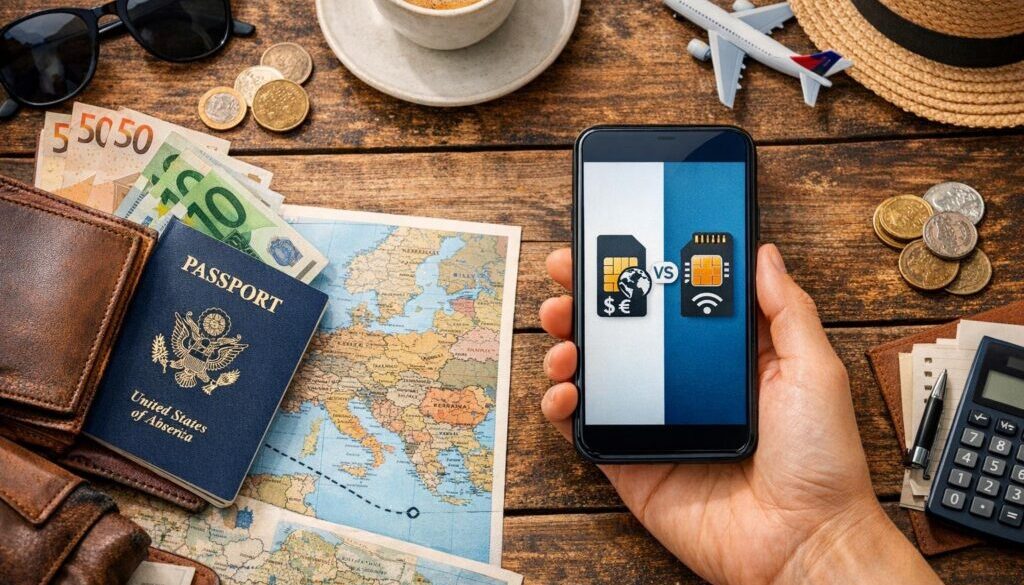
If you’re planning a trip from the US to Europe, the big question is usually not whether you need mobile data, but how much a Europe eSIM cost for US travellers and whether it’s actually worth it. For most travellers, a Europe eSIM is a simple way to get data without worrying about roaming fees, swapping physical SIM cards, or hunting for Wi-Fi at the airport.
The exact price depends on your trip length, data needs, and whether you want coverage in one country or across multiple European destinations. If you want the easiest place to start, is a practical option to compare early, especially if you want fast activation before departure and a simple way to stay connected on arrival.

Quick answer: a Europe eSIM usually costs less than traditional US carrier roaming for most trips, and the best-value plan is the one that matches your travel dates and data usage. Light users can often get away with a smaller plan, while map-heavy travellers, families, and digital nomads usually need more data or a longer validity period.
What does a Europe eSIM cost for US travellers?
The best way to think about the Europe eSIM cost for US travellers is by value, not just by sticker price. A cheaper plan is not always better if it runs out halfway through your trip or doesn’t cover the countries you’re visiting.
In general, Europe eSIM pricing is shaped by three things:
- How much data you need
- How long the plan lasts
- How many countries are included
For a short city break, many US travellers only need enough data for maps, messaging, ride-hailing, booking confirmations, and a bit of browsing. For a longer holiday or multi-country trip, the price usually rises because the plan needs to last longer and support more usage.
Typical price range
Because Roamzy updates plans over time, it’s best to check the live product page for the current Europe eSIM cost for US travellers. As a general rule, you can expect pricing to vary based on whether you choose:
- small-data travel plans for light use
- medium plans for everyday travel
- larger or unlimited-style plans for heavy use
If you are comparing options, don’t just look at the headline price. Check whether the plan gives you enough data for the full trip, because a plan that is too small can end up costing more if you need a second purchase later.
What “good value” looks like
A good-value Europe eSIM for US travellers should give you:
- enough data for your full trip
- coverage in the countries you actually plan to visit
- a validity period that matches your travel dates
- easy activation before or after landing
That’s why the cheapest option is not always the best one. If you’re travelling from the US for 10 to 21 days, a plan with the right validity window often matters more than saving a few dollars upfront.
What affects the price of a Europe eSIM?
If you’re trying to estimate the Europe eSIM cost for US travellers, the biggest pricing factors are usually straightforward. Understanding them makes it easier to avoid overpaying for data you won’t use.
1. Data allowance
The more data included, the higher the price will usually be. That makes sense, because a traveller who only needs Google Maps and WhatsApp will use far less than someone streaming videos, working remotely, or uploading photos all day.
Here’s a simple guide:
| Traveller type | Typical usage | What to look for |
|---|---|---|
| Light user | Maps, messaging, email, bookings | Smaller data plan |
| Moderate user | Navigation, social media, photo sharing, regular browsing | Mid-size plan |
| Heavy user | Work calls, hotspot use, video, frequent uploads | Larger or unlimited plan |
2. Validity period
A 7-day plan usually costs less than a 30-day plan, but only if you’re staying that long. If you’re in Europe for several weeks, a shorter plan may look cheaper at first and then become more expensive when you need to top up or buy another one.
3. Number of countries covered
Some travellers only need one country, but many US visitors do a multi-country trip. If your itinerary includes France, Italy, Spain, Germany, or several stops on the same holiday, a regional Europe eSIM is usually better value than buying separate country plans one by one.
That is one of the main reasons Europe eSIM cost for US travellers can vary so much: more coverage often means more convenience and a slightly higher price, but it can still be cheaper than buying multiple local SIMs.
4. Network quality and speed
Travellers often focus on price and forget the quality of the connection. A cheaper plan is not much help if it struggles in train stations, on road trips, or inside older buildings. Good coverage matters for everyday travel tasks like Google Maps, bank verification, translating signs, and checking hotel details while on the move.
5. Included extras
Most travel eSIMs are data-only, which is fine for many travellers because you can still use iMessage, WhatsApp, FaceTime Audio, Google Maps, Uber, and email. If a plan includes calls or texts, that may affect the price. The same goes for unlimited data plans or longer validity periods.
Ready to Stay Connected?
Compare Roamzy’s Europe eSIM options and choose a plan that suits your trip.
Europe eSIM vs roaming: which is cheaper?
For many US travellers, the real comparison is not just Europe eSIM cost for US travellers, but whether that cost is better than using their normal carrier roaming plan. In many cases, the eSIM wins on simplicity and value.
Here’s the general trade-off:
| Option | Best for | Main drawback |
|---|---|---|
| Europe eSIM | Travellers wanting easy setup and predictable data costs | Usually data-only |
| US carrier roaming | People who want to keep their existing plan active | Can be expensive or limited |
| Local SIM | Long stays in one country | Requires finding a store and swapping SIMs |
| Pocket Wi-Fi | Groups or travellers with several devices | Another device to carry and charge |
Why US roaming can be expensive
US roaming can be convenient, but it often comes with daily fees, limited high-speed data, or terms that make it hard to predict the final bill. That’s a problem if you’re using navigation all day, checking emails, uploading photos, or moving between countries.
Before you leave, it’s worth checking your carrier’s current international roaming terms so you know exactly what’s included. If you want a cleaner comparison, the Roamzy Europe eSIM can often be a simpler way to manage travel data costs.
When an eSIM saves money
An eSIM usually makes the most sense when:
- you want to avoid roaming charges
- you’re visiting multiple European countries
- you need data as soon as you land
- you prefer a prepaid travel setup
- you don’t want to rely on public Wi-Fi
If your trip includes airport transfers, train travel, or a packed itinerary, having mobile data from the start is often worth far more than the small difference between plans.
How much data do US travellers need in Europe?
The best way to control Europe eSIM cost for US travellers is to choose the right amount of data in the first place. A lot of travellers overbuy, but many also underestimate how much data everyday travel can use.
Light usage
Light users mainly rely on:
- Google Maps
- WhatsApp or iMessage
- hotel and booking apps
If this sounds like your trip, a smaller plan may be enough.
Moderate usage
Moderate travellers usually add social media, photo sharing, ride apps, restaurant research, and regular web browsing. This is the most common profile for holidaymakers and couples travelling across Europe for 1 to 3 weeks.
Heavy usage
Heavy users include remote workers, digital nomads, families sharing hotspots, and travellers who stream video or upload large files. These users should look for a larger plan or an unlimited option if available, because the cheapest eSIM is often not enough.
A good rule is to think about how you use data at home, then add a margin for travel. Navigation, photo uploads, translation apps, and hotel searches all add up faster than people expect.
How to choose the right Europe eSIM plan
Picking the right plan is mostly about matching the product to the trip. If you get that part right, the Europe eSIM cost for US travellers becomes much easier to manage.
Match plan length to your trip
If you’re away for 10 days, don’t buy a plan that expires in 7 days unless you’re happy to top up. If you’re travelling for a month, a longer validity plan is usually better value.
Match data to your usage
Think about whether you’ll mainly use data for:
- navigation
- social media
- video calls
- streaming
- hotspot sharing
The more of those boxes you tick, the more data you’ll need.
Check country coverage before buying
This is especially important for rail trips and multi-country holidays. If you’re moving through several destinations, make sure the plan supports all of them before you pay. That is one of the easiest ways to avoid a mismatch between price and travel needs.
Know whether you need calls and texts
Many US travellers do not need traditional calls or SMS while abroad because they can use messaging apps over data. But if you expect SMS verification codes from banks or work systems, check how your phone will handle those messages before you travel.
For setup help, it’s also worth reading practical guides like what is an eSIM, how to install an eSIM on iPhone, and how to install an eSIM on Android. If your device is older, check the eSIM compatibility checker first.
For broader trip planning, you may also find the how much data do I need for travel guide and roaming vs eSIM comparison useful.
Is a Roamzy Europe eSIM a good option?
For many US travellers, yes. A Roamzy Europe eSIM is a practical option if you want to land in Europe with data already ready to go. That matters when you’re trying to find your transfer, open a map, message your hotel, or check a boarding pass without depending on airport Wi-Fi.
Roamzy is a particularly good fit if you want:
- a simple prepaid travel setup
- coverage for a European itinerary
- an easy way to avoid roaming shock
- a product you can set up before departure
If your trip is more data-heavy, you should also compare larger plan options or an unlimited plan. If you’re visiting multiple countries, make sure the plan covers the entire route rather than only one stop.
Who it’s best for
A Roamzy Europe eSIM makes the most sense for:
- first-time eSIM users
- US tourists visiting Europe for 1 to 4 weeks
- travellers who want predictable costs
- people using maps, translation, and messaging apps on the go
- travellers who want to skip physical SIM queues
If you’re planning a walking-heavy city break, you may also enjoy Walkables – Immersive Self Guide Audio Walking Tours From Around Europe, especially if you like exploring independently between hotels, museums, and neighbourhoods.
Practical travel tips before you buy
Here are a few things that help US travellers avoid paying too much for a Europe eSIM:
- Buy for the whole trip, not just the first few days. Running out of data mid-trip is frustrating and can be more expensive than buying the right plan once.
- Check whether your trip is one country or many. Multi-country plans usually save time and reduce hassle.
- Don’t overestimate how much Wi-Fi you’ll have. Hotels, trains, and airports are not always reliable enough for daily use.
- Turn off background app updates. This helps stretch your data.
- Keep your primary US number active if needed. Many travellers use eSIM data and keep their home line for calls or verification codes.
💡 Roamzy Travel Tip™
If you’re connecting through an airport and heading straight into a city, activate or test your eSIM before you leave home. That way you can open maps, check your transfer, and message family the moment you land, instead of trying to sort it out with patchy airport Wi-Fi.
Ready to Stay Connected?
Compare Roamzy’s Europe eSIM options and choose a plan that suits your trip.
Conclusion: what should US travellers expect to pay?
The Europe eSIM cost for US travellers depends mostly on data, trip length, and whether you need one country or several. For most trips, an eSIM is a cleaner and often better-value alternative to roaming, especially if you want predictable costs and instant access to data on arrival.
If you’re travelling light, a smaller plan may be all you need. If you’re using maps all day, working remotely, or travelling across several countries, it usually makes sense to choose a larger or longer-validity plan from the start. Either way, the key is to match the plan to the trip, not the other way around.
For a straightforward way to compare options, start with and choose the plan that best fits your Europe itinerary.
FAQ: Europe eSIM cost for US travellers
Do Europe eSIM prices vary by country?
Yes. Prices can vary depending on whether the plan covers one country or several, and whether the route is in a single destination or across a broader Europe region.
Can one Europe eSIM work in multiple countries?
Many Europe eSIM plans are designed for multi-country travel, but you should always check the coverage list before buying. This is especially important for rail holidays and multi-stop itineraries.
Is an eSIM cheaper than roaming with a US carrier?
Often, yes. Many travellers find that a travel eSIM gives them more predictable costs than carrier roaming, especially on longer trips or when using data regularly.
Can US travellers keep their number while using a Europe eSIM?
Usually yes, depending on your phone and how you configure your lines. Many travellers keep their US number available for calls or verification while using the eSIM for data.
Is a local SIM better value than a Europe eSIM?
Sometimes, especially for long stays in one country. But for most US tourists, an eSIM is easier because it avoids store visits, language issues, and SIM swapping.
How much data do I need for a 2-week Europe trip?
It depends on your habits, but most travellers use more than they expect when navigating, messaging, and sharing photos. If you’ll use your phone daily, it’s usually safer to choose a mid-size plan rather than the smallest one available.
Can I use a Europe eSIM for hotspot?
Some plans support hotspot use and some may not, so check the plan details before buying. If you plan to share data with a laptop or another device, make sure the plan is suitable for that use.
When should I buy my Europe eSIM?
Ideally before you leave the US. That gives you time to install it, check compatibility, and avoid any last-minute setup stress after landing.
Useful sources for trip planning
For navigation and route planning, many travellers rely on Google Maps. If you’re comparing transport routes across countries, Rome2Rio is also useful. For money transfer and travel spending comparisons, Wise is a handy reference, and you should always check your US carrier’s current international roaming terms before departure.
If you run a travel business or manage bookings and workflows behind the scenes, you may also find Simple Automations useful for automations for small business.