How Much Data Do I Need for Europe? A Practical Europe eSIM Data Usage Guide
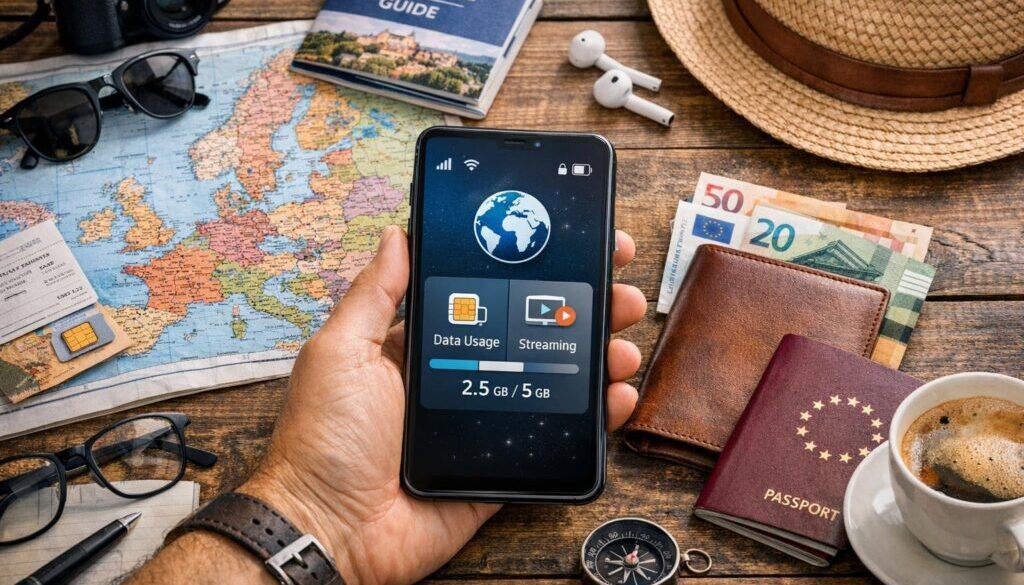
If you’re planning a Europe trip from the US, one of the smartest questions to ask before you fly is how much data you’ll actually use. Your Europe eSIM data usage depends on how you travel: whether you’re mainly using Google Maps, sending messages, posting on social media, making video calls, or relying on hotspot data for a laptop or tablet.
The right answer is rarely “the most data possible”. It’s usually “enough data for the way you travel, without paying for more than you need”. For many travellers, a Europe eSIM is the simplest way to stay connected across multiple countries without worrying about roaming surprises or hunting for Wi‑Fi.
Quick takeaway: light users can often manage with a small plan, moderate users usually need a mid-sized plan, and heavy users should look for larger data options or unlimited plans. If you want flexibility before departure, Roamzy’s Europe eSIM options are a practical place to start.

Below, we’ll break down typical data use by activity, trip style and trip length so you can estimate your own Europe eSIM data usage more accurately.
How Much Data Does a US Traveller Need in Europe?
There’s no single number that fits everyone. A traveller who mostly uses maps, WhatsApp and email will use far less data than someone uploading videos, streaming music all day or tethering a laptop.
Europe trips also tend to use more data than people expect because travel days are active days. You may be checking train times, navigating unfamiliar streets, translating menus, booking rides, messaging family and looking up hotel details all in the same afternoon.
That’s why it helps to think in terms of habits rather than one flat daily average. Your Europe eSIM data usage will usually depend on:
- How often you use maps and navigation
- How much you scroll social media
- Whether you make video calls
- Whether you stream music or video
- Whether you use hotspot for another device
Typical Data Usage by Travel Activity
These activities are the most common reasons travellers burn through data in Europe. Exact usage varies by app and quality settings, but the patterns below are a useful planning guide.
Maps and navigation
Navigation is one of the most important reasons to have mobile data abroad. Google Maps, Apple Maps and transit apps use data to load routes, public transport updates and live traffic. The good news is that plain map browsing usually doesn’t use much compared with video or hotspot use. The catch is that repeated route changes, live traffic and constant location updates can add up over a full day of sightseeing.
If you’ll be walking around cities, taking trains, or driving in rural areas, maps are usually a must-have. This is especially true if you arrive at an airport late at night and need directions immediately.
Messaging and email
Text messaging, email and app-based chat use relatively little data. WhatsApp, iMessage, Telegram and similar apps are usually very light unless you send lots of photos, voice messages or large attachments. For many travellers, this category is one of the smallest parts of overall Europe eSIM data usage.
Social media
Scrolling social feeds is where data usage can climb faster than people expect. Loading images, autoplay videos and short-form clips all consume data. Posting photos is usually manageable, but uploading videos or doing live stories regularly will use much more.
If you plan to post throughout the trip, moderate your app settings and avoid letting videos autoplay on mobile data.
Video calls
Video calls with family, work or friends use noticeably more data than simple messaging. A short call may not seem like much, but repeated calls over a week can become a meaningful part of your total usage.
If you’re travelling for business or checking in with home daily, factor this into your estimate. A few 20-minute video calls across a trip can push a small plan into the “too tight” category.
Streaming music and video
Music streaming is moderate, while video streaming is high. Listening to playlists while on trains, buses or flights is usually more manageable than streaming TV shows or sports over mobile data. If you expect to watch lots of video, your Europe eSIM data usage will rise quickly.
Try downloading playlists and shows before departure if your trip includes long transit days or downtime in the hotel.
Hotspot and tethering
Using your phone as a hotspot for a laptop or tablet can be the fastest way to go through data. Email sync, cloud backups, video meetings and software updates all consume data in the background. Even light laptop use can use more data than casual phone browsing.
If hotspot use is part of your trip, choose a larger plan than you think you need. This is one of the most common reasons travellers underestimate their data needs.
How Much Data You Need by Trip Style
The easiest way to estimate your Europe eSIM data usage is to match your trip style to a rough usage profile.
| Traveller type | Typical daily use | Good fit for |
|---|---|---|
| Light user | Low | Maps, messaging, email, occasional web browsing |
| Moderate user | Medium | Regular navigation, social media, photos, some video calls |
| Heavy user | High | Frequent streaming, lots of video calls, hotspot use, constant connectivity |
Light user: basic navigation and messaging
If you mainly want maps, ride-hailing, restaurant searches, messaging and the occasional email check, you’re probably a light user. This is common for couples on short city breaks, retirees who mostly use their phones for practical tasks, and travellers who rely on hotel Wi‑Fi for most browsing.
Light users often don’t need a huge plan, but they do need enough allowance to avoid constantly worrying about usage.
Moderate user: everyday browsing and social media
Moderate users tend to check maps often, browse social media, upload photos and make the occasional call or video call. This is probably the most common travel pattern for families and leisure travellers on a week-long Europe trip.
For this group, a mid-sized plan is often the sweet spot. It gives you enough room for daily use without overbuying.
Heavy user: video, hotspot and constant connectivity
If you work while travelling, stream content regularly, upload lots of photos and videos, or share your connection with another device, you’re a heavy user. This is where a small plan becomes risky very quickly.
Heavy users should look carefully at larger data plans or unlimited options, especially if they’ll be crossing multiple countries and using mobile data as a backup for work.
Ready to Stay Connected?
Compare Roamzy’s Europe eSIM options and choose a plan that suits your trip.
How Trip Length Affects Data Needs
Your trip length matters almost as much as your daily usage. A small plan may work fine for a weekend in Paris, but not for two weeks of multi-country travel.
Weekend trip
For a short break, many travellers only need enough data for navigation, messaging and a bit of browsing. If you know you’ll have good Wi‑Fi at your hotel, you may not need a large allowance.
1-week trip
For a week in Europe, moderate users often need more than they first assume. Daily map checks, hotel lookups, tickets, translation apps and social media can add up. If you’ll be moving between cities, the extra usage from trains, taxis and outdoor sightseeing can make a mid-sized plan more comfortable.
2-week trip or longer
Longer trips usually justify a larger plan, especially if you’re visiting several countries or using your phone for work. It’s not just about the number of days; it’s about the accumulation of everyday use. A plan that seems generous on day one can feel tight by day ten.
Europe eSIM Data Usage: How to Estimate What You Need
A simple rule of thumb is to think about your trip in three parts:
- Must-have use: maps, messaging, bookings and banking apps
- Comfort use: social media, browsing and light video
- Bonus use: hotspot, streaming and frequent uploads
If your trip is mostly “must-have use”, a smaller plan may work. If your trip includes a lot of “comfort use”, a medium plan is safer. If you expect regular “bonus use”, go larger.
When in doubt, ask yourself three questions:
- Will I rely on mobile data every day?
- Will I use hotspot or video calls often?
- Will I be in multiple countries or outside Wi‑Fi most of the time?
If the answer is yes to most of these, increase your allowance.
When to Choose a Smaller Plan
A smaller plan makes sense if you:
- Are mostly using hotel Wi‑Fi
- Only need maps and messaging
- Are taking a short trip
- Don’t plan to stream or hotspot
- Want data as backup rather than your main connection
Smaller plans are often suitable for travellers who are comfortable being connected only when needed.
When to Choose a Larger Plan
Choose a larger plan if you:
- Use maps all day
- Post to social media frequently
- Make video calls
- Use your phone as a hotspot
- Travel for work or remote work
- Prefer not to think about usage every day
If you want peace of mind, a larger plan is often worth it. Running out of data in a new city is more annoying than paying a bit more upfront.
Ways to Reduce Data Use While Travelling
You don’t need to be stingy with data, but a few smart habits can stretch your allowance further.
Download maps offline
Download city maps before you head out for the day. This reduces the amount of live data your phone needs when navigating on foot or on public transport.
Turn off background app refresh
Many apps use data when you’re not actively using them. Turning off background refresh can save more than you’d expect, especially on longer trips.
Use Wi‑Fi strategically
Use hotel Wi‑Fi for larger downloads, photo backups and app updates. Mobile data is best reserved for moments when you actually need it outside.
Limit video quality
If you do stream or video call, lower the quality settings where possible. A small change in resolution can make a big difference over a full trip.
For more practical travel planning, Google Maps is a useful reference for checking routes and city distances, while Rome2Rio can help you compare transport options before you move between destinations. You can also explore the broader value of smart trip planning through Walkables – Immersive Self Guide Audio Walking Tours From Around Europe if you’re building a more active, independent itinerary.
Why an eSIM Can Be a Practical Option for Europe Travel
An eSIM is often a better fit than traditional roaming for travellers who want to manage their data in advance. You can usually set it up before departure, avoid searching for a SIM shop after arrival, and keep your home number available on the same phone if your device supports dual SIM use.
That’s especially helpful when you land after a long flight and need data immediately for airport transfers, hotel check-in or messaging family.
It also makes budget control easier. Instead of leaving roaming active and hoping for the best, you choose a plan based on your actual trip.
Europe eSIM Data Usage vs Roaming: What Travellers Usually Prefer
Many US travellers compare Europe eSIM data usage against their carrier’s international roaming offer. Roaming can be convenient, but it may come with higher daily costs, limited allowances or extra rules you need to remember.
An eSIM is usually more straightforward for travellers who want to:
- Set up data before flying
- Avoid unpredictable roaming charges
- Use data across multiple countries
- Keep travel connectivity separate from their home plan
If you’re still deciding between the two, it’s worth checking your carrier’s current international terms and comparing them with a trip-specific Europe eSIM.
Ready to Stay Connected?
Compare Roamzy’s Europe eSIM options and choose a plan that suits your trip.
Practical Examples of Europe eSIM Data Usage
Here are a few common travel patterns to help you estimate your own needs.
Example 1: Short city break
A traveller visiting London for four days uses maps, sends messages, checks restaurant bookings and uploads a few photos. This is usually a light-to-moderate usage pattern.
Example 2: Family holiday
A family travelling through Italy for 10 days uses maps every day, shares photos, checks tickets and occasionally streams video in the evening. This often becomes a moderate usage pattern with some heavy-use days.
Example 3: Work trip with hotspot
A business traveller in Germany for a week uses maps, emails, video calls and hotspot for a laptop. This is a much heavier pattern and should be planned for accordingly.
Roamzy Travel Tip™
💡 Roamzy Travel Tip™: Before you leave, check whether your most-used apps have offline modes. Download offline maps, save key booking confirmations and update important apps while you’re still on home Wi‑Fi. It can save a surprising amount of data on the first day of your trip.
Choose the Right Roamzy Europe Plan
If you’ve worked out your likely Europe eSIM data usage, the next step is choosing a plan that matches your trip length and travel style. For many US travellers, the easiest approach is to pick a Europe eSIM that covers the countries on the itinerary and leaves a little extra room for navigation, photos and unexpected use.
Start with the Europe eSIM options here: Roamzy Europe eSIM plans. If you’re still unsure, choose the plan that better matches your real habits rather than the smallest number on the page.
The goal is simple: stay connected, avoid roaming surprises and spend less time worrying about data while you travel.
FAQs
Is 1 GB enough for a short trip to Europe?
It can be, if you’re a very light user and mostly rely on Wi‑Fi. But if you use maps often, upload photos or make calls, 1 GB may feel tight very quickly.
Is 5 GB enough for a week in Europe?
For many light-to-moderate travellers, 5 GB may be enough for a week if usage is controlled. If you use social media heavily or make video calls, you may want more.
How much data does Google Maps use?
Google Maps usually uses less data than video apps, but repeated navigation, live traffic and frequent route changes can still add up over a day of sightseeing.
Does hotspot use increase data use a lot?
Yes. Hotspot use can raise data consumption quickly because laptops and tablets often run background tasks, sync services and updates without you noticing.
Should I get a small or large Europe eSIM plan?
Choose smaller if you only need basic navigation and messaging. Choose larger if you stream, video call, hotspot or want more freedom without checking usage all the time.
Is an eSIM better than roaming for Europe?
For many travellers, yes. It’s often easier to set up in advance and gives you more control over costs than leaving international roaming turned on.
Can I use one Europe eSIM across multiple countries?
Many Europe eSIMs are designed for multi-country travel, which is ideal if you’re visiting several destinations on one trip. Always check the plan details before buying.
How do I avoid running out of data abroad?
Estimate your daily use honestly, download offline maps, use Wi‑Fi where possible and choose a plan with a little buffer rather than the bare minimum.
Final Thoughts
Estimating Europe eSIM data usage doesn’t have to be complicated. Start with your real travel habits, think about how often you’ll use maps, messaging, social media and video, and then choose a plan that gives you enough room to enjoy the trip without constantly checking your balance.
For most US travellers, a Europe eSIM is a practical way to stay connected from the moment you land. It helps you avoid roaming surprises, keeps trip planning simple and gives you control over what you spend before you leave.
If you’re ready to compare options, explore Roamzy’s Europe eSIM plans and choose the data amount that suits the way you travel.