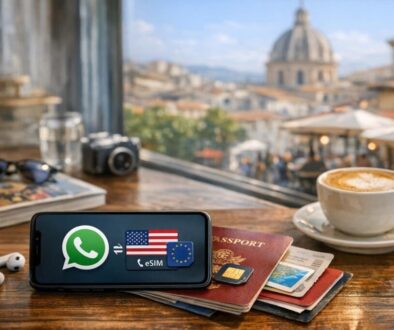

Europe eSIM vs Optus International Roaming: Which Is Better for Europe in 2026?
If you’re heading to Europe and you’re with Optus, one of the biggest decisions is whether to use Europe eSIM vs Optus international roaming. Both can keep you connected, but they suit very different kinds of trips.
Quick answer: for most Australian travellers, a Europe eSIM is usually better value and easier to manage, especially for longer trips or multi-country itineraries. Optus roaming can still make sense for very short trips, emergency-only use, or travellers who want to keep everything on their current mobile plan.
For travellers who want simple setup, predictable costs, and data that works across borders, a Roamzy Europe eSIM is often the more practical choice. It’s especially useful when you land, need Google Maps straight away, and don’t want to think about roaming charges every time you check messages or book a train.
Europe eSIM vs Optus international roaming: the short version
| Feature | Europe eSIM | Optus international roaming |
|---|---|---|
| Typical value | Usually better for most trips | Can be convenient, but often costs more |
| Setup | Install before departure or on arrival | Usually activate through your carrier account or roaming settings |
| Multi-country travel | Excellent for crossing borders | Depends on Optus roaming terms and included destinations |
| Cost control | Clear prepaid data plan | Can be harder to predict if usage varies |
| Best for | Most tourists, families, digital nomads, multi-country trips | Very short stays or light emergency use |
What is a Europe eSIM?
A Europe eSIM is a digital SIM that gives you mobile data in Europe without needing a physical SIM card. You usually buy it online, scan a QR code, and activate it on a compatible phone.
For travellers, the main appeal is simplicity. You can usually set it up before you fly, land with data ready to go, and use apps like Maps, WhatsApp, email, ride-hailing, translation tools, and banking verification codes without relying on airport Wi-Fi.
For people moving between countries, a Europe eSIM is often the smoother option because you don’t have to switch plans every time you cross a border.
What is Optus international roaming?
Optus international roaming lets eligible Optus customers use their Australian mobile service overseas, subject to Optus’s current roaming terms. The exact pricing, inclusions, and eligible destinations can change, so it’s important to check Optus’s current international roaming information before you leave.
Roaming is appealing because it feels familiar. You keep your existing number, your existing plan, and in some cases your phone works overseas with minimal setup. That convenience can be useful, but it doesn’t always mean it’s the best value.
For many travellers, the real question is not “Does roaming work?” It’s “Is roaming worth what I’ll pay for the trip?”
Europe eSIM vs Optus international roaming: key differences
1. Cost
Cost is usually the biggest difference in the Europe eSIM vs Optus international roaming comparison. Roaming is often sold as a convenience feature, which means you may pay a premium for simplicity. A Europe eSIM is generally prepaid, so you know your data cost upfront.
That matters because European travel rarely happens in a straight line. You might check directions in Paris, book a museum in Rome, look up a train in Switzerland, and use data again at the airport. Even light use can add up quickly if your roaming plan charges by day or has a high minimum cost structure.
If you want to compare total trip cost, think about:
- trip length
- number of countries
- how much data you’ll use each day
- whether you need calls and texts, or mainly data
2. Setup and activation
A Europe eSIM is usually installed before departure or shortly after arrival. Once it’s active, you can switch on mobile data and start using your apps. That makes it a great option for travellers who want to land, open Google Maps, and get moving.
Optus roaming is straightforward if you already know how to manage it in your account or phone settings, but it still depends on your current carrier terms and device settings. Some travellers like keeping their normal number active; others simply want the easiest possible data connection on arrival.
If you’re a first-time eSIM user, setup is usually easier than people expect. The key is to check compatibility before you leave.
3. Coverage across Europe
A good Europe eSIM is designed for travel across multiple countries, which is a major advantage if your itinerary includes more than one stop. That can be especially useful for rail trips, road trips, cruises, and open-jaw itineraries.
Optus roaming coverage depends on the provider’s current roaming destinations and terms. Before choosing roaming, check that every country on your itinerary is included and that the roaming experience is acceptable for how you travel.
If you’re visiting only one country and your trip is short, roaming may feel simpler. But for a broader Europe itinerary, a regional eSIM often wins on convenience.
4. Data flexibility
With a Europe eSIM, you can usually choose the amount of data that matches your trip. That gives you more control if you’re a light user who only needs maps, messaging, and a few bookings, or a heavier user who streams content and uses tethering.
Optus roaming may be less flexible if the roaming structure doesn’t align with your actual usage. If you’re paying for convenience but only need a small amount of data, you may end up spending more than necessary.
5. Calls and texts
One reason some travellers stick with Optus roaming is the comfort of keeping their normal phone number active for calls and SMS. That can help if you expect calls from banks, hotels, airlines, or family.
But for many travellers, the most important overseas tasks happen through apps, not calls. WhatsApp, FaceTime, Messenger, email, and bank app verification often matter more than traditional voice calls.
If you mainly need mobile data, a Europe eSIM is usually the smarter buy. If you genuinely need your Australian number to be available for regular calling, roaming may be worth considering.
Which option is better for different trip types?
Best for short trips: Optus roaming can be convenient
If you’re going away for only a few days and you want to do the absolute minimum setup, Optus roaming may be enough. This is especially true if you barely use data and mainly want your phone to work without thinking about it.
That said, even on short trips, roaming costs can still be hard to justify if you only need maps, messaging, and a little browsing. In many cases, a short-validity Europe eSIM will still be better value.
Best for multi-country Europe travel: Europe eSIM
If you’re travelling through Italy, France, Spain, Germany, the Netherlands, or other nearby countries, a Europe eSIM is usually the better fit. You don’t want to be worrying about changing settings every time you cross a border or check whether roaming is still the cheapest option that day.
Multi-country travellers tend to value predictability. A regional eSIM makes that much easier.
Best for business travellers: usually a Europe eSIM plus your Australian number
Business travellers often need dependable data for email, maps, calls over apps, and quick hotspot use in airports or hotels. A Europe eSIM is often the most cost-effective way to keep data flowing, while your Optus service can stay available for any calls or messages you want to receive on your Australian number.
That combination gives you flexibility without relying entirely on roaming.
Best for light data users: compare total cost carefully
If you only use a little data each day, roaming might seem acceptable at first glance. But light users should still compare the full trip cost, not just the first day’s price. A prepaid eSIM often gives better value even when usage is modest.
Best for heavy data users: Europe eSIM or an unlimited plan
If you use hotspot, upload photos, stream video, or work remotely, a Europe eSIM is usually more practical than roaming. Heavy data users should also consider an unlimited data plan if their trip style requires constant connectivity.
Potential downsides of Optus international roaming
Higher cost
Roaming often costs more because you’re paying for the convenience of using your existing mobile service overseas. That can be fine for occasional use, but it’s not always ideal for daily travel.
Less predictable spending
Travellers can underestimate how much data they use. A few Google Maps checks, restaurant searches, translation lookups, and photo uploads can quickly turn a “light use” trip into a more expensive one than expected.
Not always the best fit for border-hopping
Europe travel often includes multiple countries. If your roaming setup doesn’t feel simple across borders, it can become annoying fast. A regional eSIM usually handles this more cleanly.
Why a Europe eSIM may be better in 2026
1. Better cost control
With a Europe eSIM, you know what you’re paying before you fly. That makes budgeting easier, especially for families, retirees, and travellers planning a longer holiday.
2. Easier arrival experience
Airports are the worst place to figure out connectivity from scratch. If your eSIM is already installed, you can land and get online immediately. That means smoother navigation, easier ride bookings, and less stress.
3. Better fit for modern travel habits
Most travellers now rely on data more than calls. They use apps for navigation, bookings, tickets, translations, payments, and communication. A Europe eSIM is built for that kind of travel.
4. Easier multi-country travel
One of the biggest advantages of a regional eSIM is that it can follow your itinerary instead of forcing you to manage roaming each time you cross a border.
If your Europe trip includes train travel, multiple cities, or a cruise with port stops, this matters a lot.
How to choose the right option
Use this simple decision guide when comparing Europe eSIM vs Optus international roaming:
- Choose Optus roaming if you want minimal setup, very light use, and you strongly prefer to keep everything on your current mobile plan.
- Choose a Europe eSIM if you want better value, more control over costs, and easier travel across multiple European countries.
- Choose an unlimited plan if you know you’ll use a lot of data every day.
- Choose Roamzy Secure™ if you’ll rely heavily on hotel, airport, or café Wi-Fi and want extra privacy protection.
One simple rule helps most travellers: if your trip is longer than a quick stopover, the Europe eSIM usually becomes the better buy.
Roamzy Travel Tip™
💡 Roamzy Travel Tip™ Install your Europe eSIM before you leave Australia, then leave your Optus SIM enabled for calls and SMS if you need it. That way, you can use your eSIM for data and still keep your Australian number available for important messages and two-factor authentication codes.
What most Europe travellers should choose
For most Australian travellers, the answer in the Europe eSIM vs Optus international roaming debate is simple: a Europe eSIM is usually the better option.
It tends to offer better value, more predictable spending, and a more convenient experience once you’re on the ground. It’s especially strong for:
- multi-country itineraries
- city breaks with lots of navigation
- business travel
- families sharing the travel admin load
- longer holidays where roaming costs can add up
Optus roaming still has a place for travellers who want everything to stay inside their existing mobile plan, but it’s usually the convenience option, not the value option.
If you’re after a straightforward Europe data solution, a Roamzy Europe eSIM is a smart starting point. For travellers who want to understand the broader decision, you can also read eSIM vs roaming and best eSIM for Europe.
FAQ: Europe eSIM vs Optus international roaming
Is a Europe eSIM cheaper than Optus roaming?
In most cases, yes. A Europe eSIM is usually prepaid and gives you more control over cost, while roaming often charges a premium for convenience. Always compare the total trip cost before deciding.
Does Optus roaming work in all European countries?
Not necessarily. Coverage depends on Optus’s current international roaming terms and eligible destinations. Check the latest Optus information before you travel.
Can I use both Optus roaming and a Europe eSIM?
Yes, many travellers do. A common setup is to keep the Optus SIM active for calls and SMS while using the eSIM for mobile data.
Will my phone work with a Europe eSIM?
Only if your phone supports eSIM and is unlocked. Check your device compatibility before buying.
Is an eSIM easier to use than roaming?
For most travellers, yes. Once installed, an eSIM is usually very easy to use and avoids the need to manage roaming charges while overseas.
Should I use Optus roaming for a weekend trip?
It might be convenient for a very short trip, but many travellers still find a short-validity Europe eSIM better value even for weekend travel.
Can I keep my Australian number with a Europe eSIM?
Yes. If your phone supports dual SIM or eSIM plus physical SIM, you can usually keep your Australian number active while using the eSIM for data.
Useful links for planning Europe connectivity
- Europe eSIM
- Best eSIM for Europe
- eSIM vs roaming
- How much data do I need for Europe travel?
- How to set up an eSIM on iPhone
- How to set up an eSIM on Android
- eSIM compatibility checker
- Roamzy Secure™ Travel VPN
Authoritative sources to check before you travel
Final verdict
If you’re comparing Europe eSIM vs Optus international roaming for a 2026 Europe trip, the better choice for most travellers is a Europe eSIM. It usually gives you better value, easier setup, and fewer surprises when you move between countries.
Optus roaming is still useful in some situations, especially for travellers who only need very light use and want to keep their existing mobile service active. But if you want predictable spending and straightforward travel connectivity, a Europe eSIM is usually the smarter move.
For a practical, traveller-friendly option, explore the Roamzy Europe eSIM and choose the amount of data that matches your trip.