
Europe eSIM vs Telstra International Roaming: Which Is Better for Europe?
If you’re heading to Europe from Australia, the big question is usually the same: should you stick with Telstra International Roaming, or is a Europe eSIM the smarter choice? For most travellers, the answer comes down to cost, convenience, and how much data you actually need.
Quick answer: a Europe eSIM is usually the better fit for travellers who want prepaid control, easier multi-country use, and less chance of roaming bill shock. Telstra roaming can still make sense if you want to keep everything on your existing plan and only need light connectivity for a short trip.
For travellers planning ahead, Roamzy’s Europe eSIM is worth considering early because it gives you a simple way to stay connected across Europe without relying on day-by-day roaming charges or surprises when you land. It’s especially useful if you need maps, messaging, ride apps, hotel check-ins, or bank verification codes as soon as you arrive.
Early recommendation: if you want flexibility and better control over spend, start by comparing your trip length and data needs against a Europe eSIM. If you only need occasional use and prefer to keep your Telstra service unchanged, Telstra roaming may be enough.
What is Telstra International Roaming?
Telstra International Roaming lets eligible Telstra customers use their mobile service overseas in supported destinations, including parts of Europe. In practical terms, it means you can use your Australian number abroad without swapping to a new SIM or changing your main mobile service.
That can be convenient, especially if you want to keep receiving calls and SMS on your Telstra number. But convenience does not always mean best value. Roaming can become expensive quickly, so it’s important to check Telstra’s current international roaming terms before you travel.
When Telstra roaming can be useful
- You only need light phone use overseas
- You want to keep your Australian number active
- You do not want to install or learn a new setup before departure
- You are taking a very short trip and prefer convenience over savings
What is a Europe eSIM?
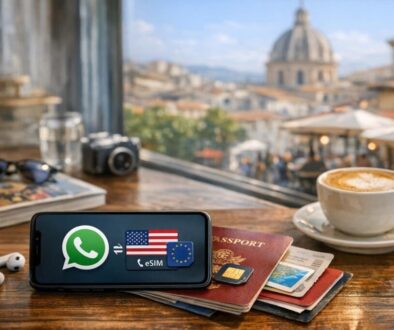
A Europe eSIM is a digital travel data plan you download to a compatible phone. Instead of using your Australian carrier’s roaming, you install the eSIM before or during your trip and connect to local mobile networks across Europe, depending on the plan.
The big benefit is control. You usually pay upfront for a set amount of data or a fixed validity period, which makes budgeting much easier than roaming. A travel eSIM also works well for people moving between countries because many Europe plans are designed for multi-country travel.
Who can use a Europe eSIM?
Most modern iPhones and many newer Android phones support eSIM, but compatibility depends on the exact device model and whether it is carrier-unlocked. Before buying, check your phone settings or use a compatibility check.
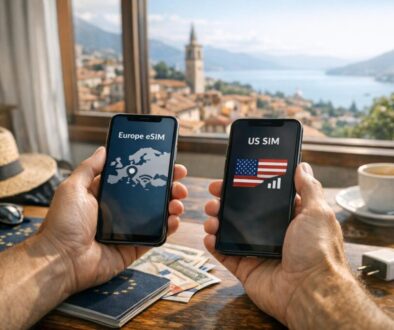
You can usually keep your Australian physical SIM installed at the same time, which means you can still receive texts or calls on your Telstra number if your phone supports dual SIM use. That’s handy for verification codes and family contact.
Europe eSIM vs Telstra International Roaming: key differences
| Feature | Europe eSIM | Telstra International Roaming |
|---|---|---|
| Upfront cost | Usually prepaid and easier to budget | Depends on Telstra’s current roaming terms |
| Setup | Install before departure or on arrival | Usually simpler if already enabled on your account |
| Data control | Fixed plan makes usage easier to manage | Can be harder to predict spend |
| Multi-country travel | Often designed for Europe-wide use | Coverage depends on roaming terms by country |
| Keep Australian number | Yes, if your phone supports dual SIM | Yes |
| Best for | Travellers wanting flexibility and cost control | Travellers who value simplicity and light usage |
1) Cost
For many travellers, cost is the deciding factor in the Europe eSIM vs Telstra International Roaming debate. Roaming charges can add up fast, especially if you use maps, social media, video calls, or streaming. A Europe eSIM is usually easier to control because you pay for a plan upfront.
That does not automatically mean an eSIM is always cheaper for every traveller, but it usually gives you a clearer idea of what you’ll spend before you leave Australia. With roaming, the risk is often not the daily charge itself but the way usage grows once you stop thinking about every megabyte.
2) Convenience and setup
Telstra roaming is convenient if you want to stay on your existing setup. A Europe eSIM is convenient in a different way: you can set it up in advance, test it before departure, and land with data ready to go. That can be a huge help when you need an airport taxi, a hotel map, or a train ticket on arrival.
For first-time eSIM users, setup is usually straightforward if they follow the instructions carefully. The key is to install it before you lose access to stable Wi-Fi, ideally at home or in your hotel before moving around.
3) Data value
If you only check emails and send a few messages, roaming may be enough. But if you use Google Maps all day, upload photos, book rides, or make video calls, a Europe eSIM usually offers better value because you can choose a plan that matches your travel style.
This matters even more for families, digital nomads, and business travellers who need reliable data without worrying about every connection. Heavy users often find prepaid travel data far easier to manage than roaming-based billing.
4) Coverage and reliability
Both options can be reliable, but they work differently. Telstra roaming uses Telstra’s roaming arrangements, while a Europe eSIM connects you to supported mobile networks in your destination countries. In real-world use, the difference is often less about “good” versus “bad” coverage and more about how the plan is built and where you’re travelling.
If you’re moving through several countries on one trip, a Europe eSIM is often simpler because you don’t need to think about changing settings each time you cross a border.
5) Flexibility for multi-country travel
Europe trips are rarely limited to one city. You might land in Paris, take a train to Brussels, then continue on to Amsterdam or Rome. A Europe eSIM is usually better suited to that style of travel because it is built for cross-border movement.
With Telstra roaming, you should always check which countries are covered and how the roaming terms apply in each destination. That extra checking is manageable, but it adds friction when all you want is simple connectivity.
Which option is better for different travellers?
Best for short trips
If you’re going away for a very short trip and only need occasional data, Telstra roaming may be fine. It can be the lower-effort option if you don’t want to think about setup.
Best for long trips
For longer Europe trips, a Europe eSIM usually makes more sense because prepaid data is easier to budget over time. The longer you travel, the more useful it becomes to know exactly what you have left.
Best for light data users
Light users can go either way. If you mostly use Wi-Fi and only need occasional mobile data, Telstra roaming may be sufficient. If you still want a predictable backup connection, a smaller Europe eSIM plan is often a cleaner option.
Best for heavy data users
Heavy users are usually better off with a Europe eSIM, especially if they rely on maps, messaging apps, cloud storage, ride-hailing, or work apps every day. The ability to choose a larger plan, or an unlimited data plan where suitable, is often more practical than trying to manage roaming.
Best for multi-stop Europe itineraries
If your trip includes several countries, a Europe eSIM is typically the better fit because you can stay connected as you move. That’s especially helpful for train travel, cruises, and flexible itineraries where you don’t want to revisit settings every time you cross a border.
Things to check before you choose
Phone compatibility
Before you buy a Europe eSIM, make sure your phone supports eSIM and is unlocked. This is especially important for travellers using older phones or carrier-locked devices.
Data allowance and fair use
Check how much data you’ll actually use. If you only need navigation and messaging, you may not need a large plan. If you stream, hotspot, or work remotely, you should compare plans carefully before deciding.
Activation timing
Some eSIMs are best installed before departure, while others are activated when they first connect overseas. Read the instructions first so you don’t waste time at the airport.
Support and backup connectivity
Think about what happens if your connection drops. Many travellers keep their Australian SIM available for SMS and use the Europe eSIM for data. That combination gives you a practical backup without relying entirely on roaming.
Why a Europe eSIM may be the smarter choice
For most Australian travellers, the main advantage of a Europe eSIM is control. You know what you bought, you know how long it lasts, and you are not relying on unpredictable roaming behaviour while travelling between airports, stations, and hotels.
It also suits modern travel habits. Today’s travellers use data for everything: maps, translation, mobile boarding passes, hotel communication, currency conversion, bank verification, and last-minute booking changes. A Europe eSIM gives you a dedicated travel connection for those everyday tasks.
If you’re comparing Europe eSIM vs Telstra International Roaming, the eSIM is often the better option when you want:
- better budget control
- simple multi-country use
- less stress on arrival
- a clearer idea of total trip cost
- a backup data connection while keeping your Australian number
Recommended option for Roamzy customers
If you’re travelling to Europe and want a cleaner alternative to roaming, Roamzy’s Europe eSIM is the most relevant option to compare first. It is designed for travellers who want practical data access without having to manage roaming surprises.
Before you depart, it helps to do three things:
- Check that your phone supports eSIM
- Choose a plan based on trip length and usage
- Install the eSIM before you leave Australia, if possible
If you’re new to eSIMs, also read these helpful guides:
- What is an eSIM?
- How to install an eSIM on iPhone
- How to install an eSIM on Android
- eSIM compatibility checker
- How to avoid roaming charges overseas
- Best eSIM for Europe travel
- Australia to Europe travel connectivity guide
- International travel internet tips
For official roaming details, check Telstra’s current international roaming information before departure:
Roamzy Travel Tip™
💡 Roamzy Travel Tip™: If you plan to use both your Australian number and a Europe eSIM, set your Telstra line for calls and SMS only if your device allows it, and use the eSIM for mobile data. That way you can still receive important texts while keeping everyday data off roaming.
Final verdict: Europe eSIM vs Telstra International Roaming
The right choice depends on how you travel, but for many Australian travellers, a Europe eSIM vs Telstra International Roaming comparison ends with the same result: the eSIM is usually the better all-round option for value, flexibility, and peace of mind.
Telstra roaming is still useful if you want the simplest possible setup and only expect light use. But if you want to avoid roaming surprises, move between countries easily, and keep your trip costs more predictable, a Europe eSIM is often the smarter way to travel.
In short: choose Telstra roaming for convenience on a short, light-use trip. Choose a Europe eSIM if you want more control, better flexibility, and a travel setup that works better for the way most people actually use their phones in Europe.
Frequently asked questions
Is a Europe eSIM cheaper than Telstra International Roaming?
Often, yes, especially if you need regular data use. A Europe eSIM usually gives you a clearer prepaid cost, while roaming can become expensive depending on how you use your phone.
Can I keep my Australian number with a Europe eSIM?
Yes, in many cases you can keep your Australian SIM installed and use the Europe eSIM for data, provided your phone supports dual SIM functionality.
Do I need to remove my Telstra SIM to use an eSIM?
Usually no. Most travellers keep their Telstra SIM in place and add the eSIM digitally.
Will a Europe eSIM work in multiple countries?
Many Europe eSIM plans are built for multi-country travel, which is one of their biggest advantages over traditional roaming. Always check the plan coverage list before buying.
Is Telstra roaming easier than an eSIM?
It can be easier if you want to avoid setup altogether. But if you are willing to do a little prep before departure, an eSIM is usually not difficult to install.
What is best for a two-week Europe trip?
For most two-week trips, a Europe eSIM is the better choice because it usually offers more predictable value and easier cross-border use.
Can I use Wi-Fi instead of roaming or an eSIM?
You can, but relying only on Wi-Fi is risky when you need maps, transport updates, or emergency access while moving around. A travel data plan is usually more practical.
What should I check before buying either option?
Check your phone compatibility, trip length, expected data use, and the latest Telstra roaming terms or eSIM coverage details before you decide.