Europe eSIM vs US Roaming: Which Is Better for Your Trip?
If you’re heading from the US to Europe, one of the first questions to sort out is whether to use a Europe eSIM or stick with your US carrier’s roaming plan. The right choice usually comes down to cost, convenience, and how much data you’ll actually need.
Quick answer: for most travellers, a Europe eSIM is the better value because it gives you local-style data access across multiple countries without the surprise fees that can come with roaming. If you only need very light usage and your carrier already includes affordable international roaming, US roaming may still work for a short trip.
For travellers who want an easy, trip-ready option, Roamzy’s Europe eSIM is worth a look early in the planning stage. It’s especially useful if you want data as soon as you land, plan to use Google Maps, or are moving between several countries on one trip.

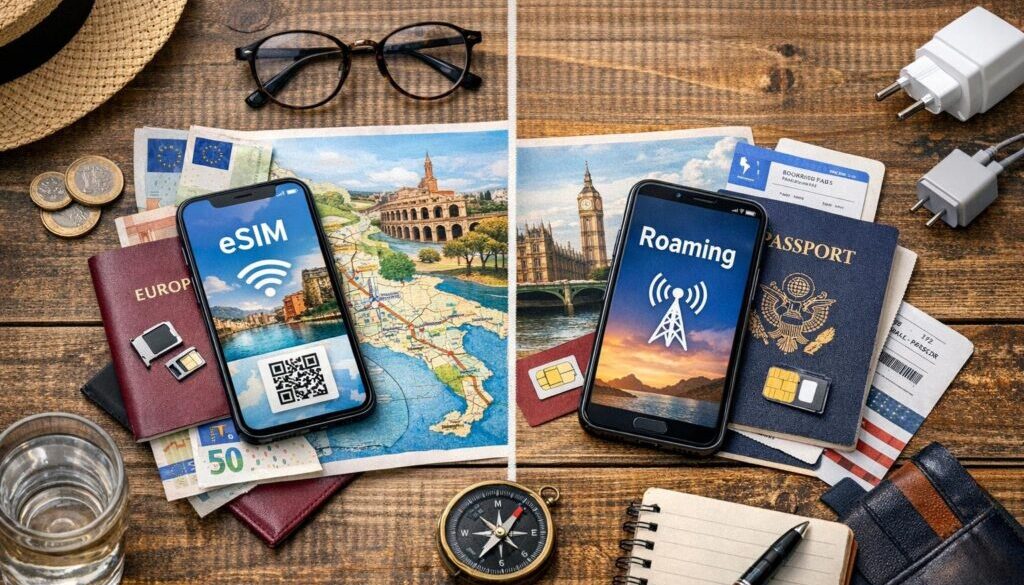
Below, we’ll compare Europe eSIM vs US roaming in plain English so you can choose the option that fits your trip, budget, and phone.
Europe eSIM vs US Roaming: What’s the Difference?
The main difference is how your phone connects while you’re abroad.
What is a Europe eSIM?
A Europe eSIM is a digital travel SIM you install on a compatible phone before or during your trip. It gives you mobile data in Europe without needing to swap physical SIM cards. Many travellers like this because it is simple, fast to activate, and usually better suited to multi-country travel.
What is US roaming?
US roaming means using your American mobile plan overseas. Your carrier may let you use data, calls, and texts in Europe for an added daily fee, an international pass, or a specific roaming allowance. The exact terms vary by carrier and plan, so it’s important to check the current roaming policy before you travel.
Why travellers compare the two
People compare Europe eSIM vs US roaming because they want the same thing: reliable data abroad without paying more than necessary. The question is not just “Will it work?” but “Which option is easier, cheaper, and less stressful during the trip?”
Europe eSIM vs US Roaming: Key Differences
Here’s the practical side-by-side view.
| Factor | Europe eSIM | US Roaming |
|---|---|---|
| Cost | Usually a fixed upfront travel data cost | Often a daily fee, pass, or roaming add-on |
| Setup | Install digitally before departure or on arrival | Usually already on your phone plan |
| Coverage | Designed for Europe travel, often across multiple countries | Depends on your carrier’s roaming agreements |
| Flexibility | Good for single-country or multi-country trips | Convenient if you want to keep your home plan active |
| Number use | Usually data-only, with your primary SIM still available | Can keep your normal number active if your plan supports it |
| Best for | Travellers wanting simple travel data and control over spend | Travellers who already have a strong international roaming option |
Cost comparison
For many travellers, cost is the deciding factor in the Europe eSIM vs US roaming debate. Roaming can be convenient, but it can also get expensive fast if your plan charges daily fees or adds extra costs for heavier use. A Europe eSIM usually gives you a clearer upfront idea of what you’re paying for.
If you mainly use maps, messaging, emails, ride apps, and hotel check-ins, a travel eSIM can be a more predictable choice. If your carrier offers a genuinely affordable roaming option, that may be fine for a very short trip.
Ease of setup and activation
One reason travellers choose a Europe eSIM is that it can be installed before you fly. That means you can land in Europe and get online quickly without hunting for airport Wi‑Fi or dealing with SIM kiosks after a long flight.
Roaming is simpler in one sense because it’s already tied to your existing plan, but it may still need activation, pass purchase, or account settings checked before departure. Always confirm your phone is set up correctly before you leave the US.
Coverage across countries
If your Europe trip includes several countries, a regional Europe eSIM is often more convenient than relying on roaming. It keeps your trip simple when you move from one border to another by train, ferry, or short-haul flight.
US roaming may also work across multiple countries, but coverage and pricing can change depending on where you are and what your carrier includes. That is why travellers crossing France, Italy, Spain, and Germany on one itinerary often prefer a travel eSIM.
Data speed and reliability
Both options can work well for everyday travel tasks like navigation, translation apps, mobile banking, social media, and restaurant bookings. The actual experience depends on local network availability, device compatibility, and your plan terms.
With roaming, your carrier handles the international access through its partner networks. With a Europe eSIM, your travel data is routed through the eSIM provider’s network agreements. In both cases, check the current terms and coverage before relying on either option for important travel needs.
Flexibility for short vs long trips
For a quick city break, US roaming can be convenient if your carrier already includes a low-cost travel option. But for a week or longer, the fixed value of a Europe eSIM often becomes more attractive, especially if you use maps and data heavily each day.
For longer itineraries, the Europe eSIM vs US roaming decision usually tilts toward the eSIM because it gives you more control over spend and avoids daily roaming charges adding up.
Ready to Stay Connected?
Compare Roamzy’s Europe eSIM options and choose a plan that suits your trip.
When a Europe eSIM Is the Better Choice
In many cases, the Europe eSIM vs US roaming choice becomes easier once you look at your actual travel style.
Multi-country Europe trips
If you’re visiting more than one country, a Europe eSIM usually makes life simpler. You don’t want to think about roaming changes every time you cross a border or arrive in a new city.
Budget-conscious travellers
Travellers who want to keep a close eye on spend often prefer a Europe eSIM because it’s easier to compare plans upfront than to gamble on roaming usage charges.
Travellers who want instant setup on arrival
Landing in a new country and being connected immediately is a big comfort, especially if you need directions, a rideshare, or to message family. A travel eSIM is designed for exactly that kind of arrival.
When US Roaming Might Make More Sense
US roaming is not always the wrong choice. In some cases, it can be the simplest option.
Short trips with your current carrier plan
If your trip is very short and your carrier offers a fair roaming add-on, staying with your existing plan may be the easiest route. It can be handy if you don’t want to change anything before departure.
Travellers who already have affordable international roaming
Some travellers already have a plan with international roaming included or available at a reasonable rate. If that’s the case, check the fine print carefully and compare it against a Europe eSIM before making a decision.
Users who need to keep their primary number active
If you rely on your US number for banking, work calls, or verification texts, roaming can feel reassuring. That said, many travellers use a travel eSIM for data while keeping their primary SIM active for calls and messages.
What to Check Before Choosing
Before deciding between Europe eSIM vs US roaming, take a minute to check the following.
Device compatibility
Not every phone supports eSIM. Check your device settings and make sure your phone is unlocked if required. If your phone is not eSIM-compatible, roaming or a physical SIM may be the better option.
Trip duration
A one-night stopover is different from a three-week trip around Europe. Short visits may suit roaming if the terms are good, while longer or multi-country trips usually favour a Europe eSIM.
Data requirements
If you only need a few messages and occasional maps, roaming might be enough. If you’ll use navigation all day, upload photos, book transport, or hotspot a laptop, a travel eSIM may give you better value.
Supported destinations
Always check which countries are included. Some roaming plans are limited, and some eSIM plans may cover a wide region rather than every European destination equally.
Whether voice and SMS matter
Many travel eSIMs are data-only. If you need traditional voice calls or SMS on your main number, think carefully about whether you want to keep roaming active, use messaging apps, or rely on a dual-SIM setup.
Best Option for Most Travellers
For most US travellers going to Europe, a Europe eSIM is the better all-round choice. It tends to be more predictable, easier to budget for, and more practical if you are crossing borders or travelling for more than a few days.
US roaming still has a place for travellers who already have a strong international plan, only need very light use, or want to keep everything tied to one mobile account. But if your priority is value and simplicity, the Europe eSIM vs US roaming comparison usually ends in favour of the eSIM.
That’s why many travellers choose to set up their travel data before departure instead of waiting to see how roaming performs after landing.
Why Choose Roamzy for Europe Travel Connectivity?
Roamzy focuses on practical travel connectivity for people who want to get online quickly and keep control of costs. If you’re comparing Europe eSIM vs US roaming, the appeal of a travel eSIM is simple: you know what you’re buying before the trip begins.
Travel eSIM convenience
A Europe eSIM is easy to plan around because it is designed for travel, not for balancing your home phone account on the fly. That makes it a strong fit for airport arrivals, train travel, day trips, and city-to-city itineraries.
Simple activation before departure
Many travellers prefer to set things up while they still have home Wi‑Fi. It removes a lot of stress from the first hour abroad, especially after a long-haul flight.
Avoiding roaming surprises
Roaming surprises are rarely pleasant. A travel eSIM helps reduce that risk by giving you a clearer view of what your Europe data will cost before you travel.
If you’re also travelling with a laptop or working remotely, consider whether you need a secure connection on public Wi‑Fi. Roamzy Secure™ Travel VPN can be a sensible add-on for travellers who rely on cafes, hotels, and airports for internet access.
And if your trip includes a long stopover, eligible 30 Day Plans may include Complimentary Layover Protection™ where available.
For a broader look at Europe travel data options, you can also compare the main plan types on the Europe eSIMs page.
Roamzy Travel Tip™
💡 Roamzy Travel Tip™: Install your travel eSIM before you leave home, but don’t switch your mobile data over until you actually need it. That way, you can test the setup on home Wi‑Fi and avoid troubleshooting in the airport.
If you’re planning a walking-heavy city trip in Europe, you may also enjoy Walkables – Immersive Self Guide Audio Walking Tours From Around Europe, which is a handy way to explore at your own pace while staying connected.
Ready to Stay Connected?
Compare Roamzy’s Europe eSIM options and choose a plan that suits your trip.
FAQ: Europe eSIM vs US Roaming
Is a Europe eSIM cheaper than US roaming?
Often, yes. A Europe eSIM usually gives you a fixed upfront cost, while roaming may involve daily charges or variable international fees. The exact answer depends on your carrier and how much data you use.
Will a Europe eSIM keep my US number?
Your US number can often stay active on your physical SIM while your travel eSIM handles data, depending on your phone setup. This is one reason dual-SIM phones are useful for overseas travel.
Does US roaming work in every European country?
Not always. Coverage depends on your carrier’s roaming agreements and plan terms. Always check the current list of covered destinations before you go.
Can I use a Europe eSIM for calls and texts?
Many travel eSIMs are data-only. You can often still use WhatsApp, FaceTime, Messenger, Zoom, and other internet-based apps for communication.
Is roaming better for a very short trip?
Sometimes. If your carrier already offers a simple, low-cost roaming option and you only need minimal use, it can be fine for a short stay.
What if my phone doesn’t support eSIM?
If your phone isn’t eSIM-compatible or unlocked, roaming may be easier. You could also look at physical SIM options where available.
Should I leave roaming on if I use a travel eSIM?
Usually it’s best to understand your phone settings before departure so you don’t accidentally use your home SIM for expensive data. Many travellers keep their primary line available for calls and texts but use the travel eSIM for mobile data.
What is the best choice for multi-country Europe travel?
For most travellers, a Europe eSIM is the more practical option because it is designed for flexible travel across multiple destinations.
Do I need Wi‑Fi to activate a Europe eSIM?
It’s often easiest to install and activate on Wi‑Fi before you leave, although the exact process depends on the provider and your device.
Final Verdict: Europe eSIM vs US Roaming
If you want the simplest summary, here it is: Europe eSIM vs US roaming is usually a choice between predictable travel data and the convenience of staying on your home plan. For most US travellers, the Europe eSIM wins on value, flexibility, and ease of use.
US roaming can still make sense if your carrier already gives you a good international option, but it’s worth checking the details carefully before relying on it. The best choice is the one that fits your trip length, your data habits, and how much control you want over costs.
If you’re heading to Europe soon, a travel eSIM is often the safer, simpler way to stay connected from the moment you land.
For travellers ready to compare options and get set up before departure, the Europe eSIM range from Roamzy is a strong place to start.