Best eSIM for Backpacking Europe in 2026: What Travellers Should Choose
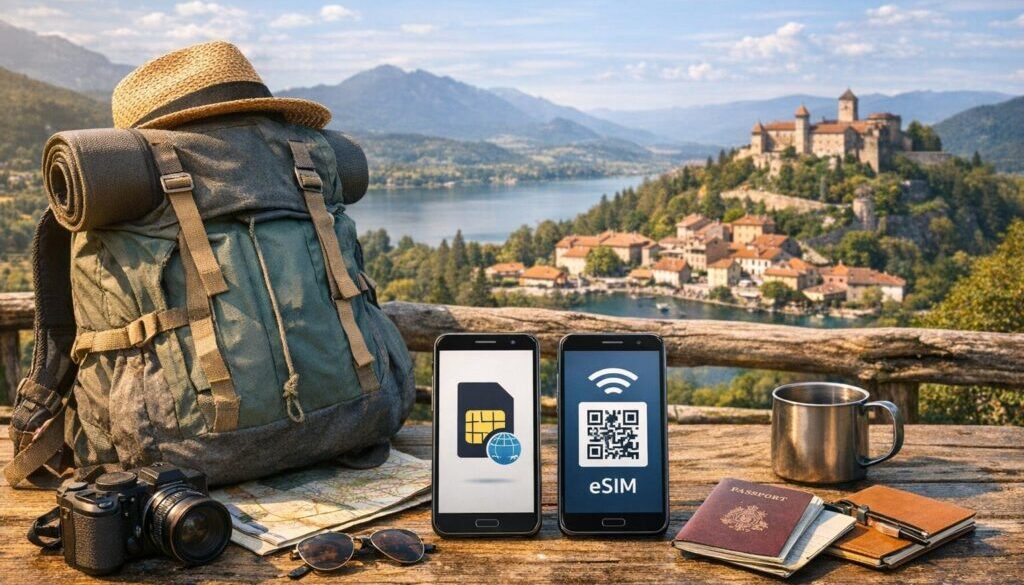
If you are planning a backpacking trip across Europe, the best eSIM for backpacking Europe is usually the one that gives you multi-country coverage, enough data for maps and messaging, and a setup that works before you even land. The goal is simple: stay connected without wasting time hunting for SIM cards in every new city.
For most backpackers, a regional Europe eSIM is the smartest starting point because it avoids the hassle of swapping physical SIMs as you cross borders. If you want a straightforward option for one trip, Roamzy’s Europe eSIM range is worth checking early, especially if you want instant activation and one plan that can follow you across multiple countries.

Quick answer: what is the best eSIM for backpacking Europe?
The best eSIM for backpacking Europe is usually a regional Europe eSIM with:
- multi-country coverage
- a data allowance that matches your trip length
- hotspot support if you need to share data
- simple activation before departure or on arrival
- clear validity dates and no confusing roaming extras
If you are moving between countries often, convenience matters more than finding the absolute cheapest plan on paper. A slightly better plan can save you time, stress, and surprise top-ups.
What makes an eSIM the best choice for backpacking Europe?
Backpacking is not the same as a single-city holiday. You may arrive in one country, take an overnight train to another, then spend two days in a third. That means your phone needs to work wherever your itinerary takes you.
Why backpackers need flexible connectivity
Backpackers usually depend on mobile data for the basics:
- Google Maps and public transport apps
- hotel and hostel check-ins
- WhatsApp and other messaging apps
- bank verification codes
- booking trains, buses, ferries, and tours
- translation apps and currency conversion
A reliable eSIM helps you do all of that without relying on patchy hostel Wi-Fi or expensive roaming.
eSIM vs local SIM vs roaming
| Option | Best for | Main downside |
|---|---|---|
| eSIM | Multi-country travel, quick setup, easy arrival connectivity | Needs a compatible phone |
| Local SIM | Long stays in one country | Time-consuming to buy and swap in each country |
| Home roaming | Occasional travellers who want simplicity | Often the most expensive option |
For backpacking Europe, an eSIM usually wins because it blends flexibility with predictable costs.
What to look for in a Europe backpacking eSIM
Not every Europe plan is built the same. Some are ideal for short city breaks. Others are better for longer routes through several countries. Here is what matters most.
1. Multi-country coverage
If your route includes more than one country, make sure the plan covers all the places you actually plan to visit. A “Europe” label sounds broad, but you should still confirm the country list before you buy.
2. Data allowance and trip length
Backpackers often underestimate how quickly data disappears. Maps, social apps, ride-hailing, photo uploads, and train bookings all add up. If you are away for several weeks, a small plan can become false economy if you keep topping up.
A good rule of thumb:
- Light use: messaging, maps, booking apps
- Moderate use: daily navigation, social media, video calls
- Heavy use: hotspot sharing, frequent uploads, remote work
3. Hotspot and tethering support
Many backpackers travel with a laptop or tablet, or they share data with a travel companion. If you want that flexibility, check whether hotspot use is allowed on the plan before you buy.
4. Easy activation and top-ups
The best eSIM for backpacking Europe is usually the one that is simple to install before departure and easy to manage once you are on the move. Top-up options are especially useful if your route changes and you end up staying in one place longer than expected.
5. Fair pricing and no hidden surprises
Backpackers are usually value-conscious. That does not always mean choosing the cheapest plan. It means choosing the plan with the best balance of price, coverage, and practical use. Pay attention to:
- validity period
- data volume
- countries included
- hotspot support
- activation rules
Ready to Stay Connected?
Compare Roamzy’s Europe eSIM options and choose a plan that suits your trip.
How to choose the right eSIM for your Europe route
The best eSIM for backpacking Europe depends on how you travel.
Best for short trips
If your backpacking trip is only one or two weeks and you are visiting just a few cities, a smaller regional plan may be enough. Focus on easy activation and enough data for maps, transport, and messaging.
Best for long backpacking itineraries
If you are crossing several borders over a month or more, prioritise a plan that gives you wider coverage and enough data to avoid constant top-ups. Longer trips also make top-up convenience more important.
Best for heavy data users
If you plan to work remotely, upload lots of photos, or use hotspot regularly, choose a plan that gives you more headroom. Heavy users usually regret going too small on data.
Best for budget travellers
Budget travellers should look at cost per gigabyte, not just the headline price. A cheaper plan with weak coverage can create extra costs later if you need an emergency top-up or a second plan.
Which European countries should your eSIM cover?
Backpacking routes often include a mix of major travel hubs and smaller stops. If your trip includes countries like France, Spain, Italy, Germany, the Netherlands, Portugal, Greece, or Central European rail routes, regional coverage matters a lot.
For many travellers, the right choice is not a single-country plan but a Europe-wide option that keeps working as you move. That is especially useful if your itinerary changes at short notice.
When regional coverage matters most
- you are travelling through more than two countries
- you are booking transport on the go
- you do not want to buy a new SIM in every country
- you are taking trains, buses, ferries, or budget flights between stops
How to set up your eSIM before you leave
The easiest time to sort out the best eSIM for backpacking Europe is before you board the plane. That way, your phone is ready when you land and you can check maps, book a ride, or message your accommodation straight away.
Device compatibility
Before you buy, make sure your phone supports eSIM and is unlocked. Most newer iPhones and many recent Android models do, but compatibility still needs checking.
Installation steps
- Buy the plan before departure.
- Scan the QR code or follow the activation instructions.
- Install the eSIM while you still have a stable connection.
- Switch it on when you arrive or when the plan instructions say to activate.
Activating after arrival
For many backpackers, activation on arrival is the simplest option because you can confirm the plan is working as soon as you land. If your eSIM provider has different activation rules, follow those instructions carefully so you do not start the validity period too early.
For a practical guide to setup, see our eSIM setup guide and our how eSIM works article.
Common mistakes backpackers make when buying an eSIM
These are the errors that cause the most frustration on the road.
Buying too little data
Backpackers often use more data than expected because they are constantly checking maps, transport times, and booking confirmations. If in doubt, round up rather than down.
Assuming every Europe plan covers the same countries
Some plans cover a broad list, while others are more limited. Always check the country list before buying, especially if your route includes smaller destinations or non-standard stops.
Forgetting hotspot restrictions
If you plan to share data with a second device or travel companion, verify hotspot support first. Do not assume every plan allows it.
Not checking activation rules
Some eSIMs begin when you install them, others when you first connect to a supported network. Read the instructions carefully so your validity period lines up with your trip.
How much data does a backpacker need?
There is no single answer, but many backpackers use more data than they expect once they are on the move. A rough starting point is:
- Light users: messaging, maps, emails
- Moderate users: daily navigation, social media, uploads
- Heavy users: hotspot, video calls, work files, frequent streaming
If your trip includes rural areas, train travel, or multiple border crossings, data becomes even more valuable because you cannot always rely on Wi-Fi.
Roamzy Travel Tip™
💡 Roamzy Travel Tip™: install your eSIM before you leave home, then keep a backup screenshot of the QR code and activation instructions in your email and phone gallery. If your device restarts mid-trip, having those details handy can save a lot of stress.
Recommended Roamzy option for backpacking Europe
If you want a practical, travel-friendly solution, a Europe eSIM is usually the best fit for backpacking Europe because it keeps your phone connected across multiple countries without the hassle of swapping SIM cards.
Roamzy’s Europe eSIM options are designed for travellers who want simple setup, flexible usage, and a cleaner way to manage connectivity while moving between destinations. If you are backpacking with a tight schedule, that convenience is often worth more than shaving off a small amount on a less flexible plan.
Before you buy, compare the plan length, data allowance, and country coverage against your itinerary. If you expect to use maps, messaging, transport apps, and occasional hotspot use, choose a plan with a little extra breathing room.
For travellers who want one plan that can support a multi-country route, this is the kind of product to start with:
Ready to Stay Connected?
Compare Roamzy’s Europe eSIM options and choose a plan that suits your trip.
Related travel resources
If you are planning a longer Europe itinerary, these guides may also help:
- Europe eSIM hub
- Best eSIM for international travel
- How much data do I need for travel?
- Europe roaming vs eSIM
- eSIM hotspot and tethering guide
- Troubleshooting eSIM activation
- Best eSIM for digital nomads
- Europe travel guides
FAQs about the best eSIM for backpacking Europe
Do I need a different eSIM for each European country?
Usually not. A regional Europe eSIM is often the easiest choice if your trip includes multiple countries. Always check the country list before buying.
Can I use one eSIM across multiple European countries?
Yes, if the plan is designed for regional use. That is one of the main reasons backpackers choose Europe eSIMs over local SIMs.
Will my eSIM work with hotspot?
Some plans do, some do not. Check the plan details before you buy if hotspot is important to you.
When should I activate my eSIM?
Ideally, install it before departure and activate it according to the provider’s instructions, often when you arrive in Europe or when the network is first used.
Is an eSIM better than buying a local SIM?
For backpacking across several countries, yes, usually. A local SIM can be good for long stays in one place, but an eSIM is much more convenient for multi-country travel.
How much data should I buy for backpacking Europe?
It depends on how you use your phone. If you rely on maps, messaging, bookings, and social apps, choose a plan with enough room for daily use and a little extra for unexpected delays or changes.
Can I keep my home number active too?
In many cases, yes. Travellers often keep their home SIM active for calls or verification codes while using an eSIM for data. Check your device settings before you travel.
Final verdict: the best eSIM for backpacking Europe
The best eSIM for backpacking Europe is the one that fits the way you travel, not just the cheapest plan on the page. For most backpackers, that means a regional Europe eSIM with solid country coverage, enough data for navigation and bookings, and an easy setup process before departure.
If your trip is multi-country, time-sensitive, or flexible, a well-chosen Europe eSIM will usually beat roaming and save you from the hassle of buying new SIMs in every city. That is exactly why many travellers start with Roamzy’s Europe eSIM options when planning a backpacking route.
Choose the plan that matches your route, your data use, and your need for convenience. Then get connected before you land so your trip starts smoothly from day one.