
If you already have a T-Mobile plan and you’re heading to Europe, the big question is simple: do you still need an eSIM for Europe?
The short answer is that sometimes you don’t—but for many travellers, an eSIM for Europe is still the better choice for reliable data, simpler cost control, and less stress once you land.
T-Mobile may give you some international roaming benefits, but the details can vary by plan and by destination. If you want predictable connectivity for maps, rideshares, messaging, banking apps, and multi-country travel, a travel eSIM can be a smart backup or even your main option. For Australians travelling from Telstra, Optus or Vodafone plans, the same decision still applies: check what your provider includes, then compare it with a dedicated Europe eSIM before you fly.
For travellers looking for a straightforward option, Roamzy’s Europe eSIM may be worth comparing before departure. Check the current plan details to make sure it fits your trip length and data needs.

Quick Answer: Do You Need an eSIM for Europe If You Have T-Mobile?
Usually, not always. If your T-Mobile plan includes international roaming in Europe and your usage is light, you may not need to buy anything extra. But if you rely on mobile data for navigation, work, family coordination, or travel across several countries, an eSIM for Europe often gives you more control and fewer surprises.
Short answer by traveller type
- Light users: You may be fine with T-Mobile roaming if your plan includes Europe and you only need occasional data, texts, and calls.
- Heavy data users: A travel eSIM for Europe is usually the safer choice for maps, streaming, hotspot use, or work apps.
- Multi-country travellers: A regional eSIM is often more convenient than relying on roaming country by country.
- Australians on short holidays: Compare your Telstra, Optus or Vodafone roaming options with a Europe eSIM before you leave.
When T-Mobile may be enough
T-Mobile may be enough if your plan already includes roaming in the countries you’re visiting, your data needs are modest, and you’re happy to verify the exact terms before your trip. In that case, you may not need an eSIM for Europe at all.
When an eSIM is the better choice
An eSIM for Europe becomes more attractive when you want predictable data, a separate travel line, easy setup, or a backup if roaming is slower or more limited than you expected. It can also be useful if you want to keep your home number active for SMS and banking verification while using travel data on the side.
What T-Mobile Typically Offers for Europe
T-Mobile often includes some kind of international roaming benefit on selected plans, but the exact inclusions matter. That’s why the first step is always to check your plan details, not assume Europe coverage is unlimited or the same across every plan.
International roaming basics
Depending on the plan, international roaming may include some combination of:
- text messaging
- calls
- mobile data
- limited-speed or reduced-speed data
That sounds convenient, but the actual experience can still vary. A plan that “works in Europe” may still come with speed limits, usage caps, or country restrictions. If your travel depends on fast and stable data, a dedicated eSIM for Europe may give you a better result.
What travellers should verify in their specific plan
Before relying on T-Mobile, check:
- Which European countries are included
- Whether data, calls, and texts are all covered
- Whether speeds are capped or throttled
- Whether hotspot/tethering is allowed
- Whether roaming is included automatically or needs activation
If you’re an Australian traveller comparing providers, do the same with Telstra, Optus and Vodafone. International roaming rules can change, and it’s worth confirming directly with your mobile provider before departure.
Data speed, usage limits, and coverage caveats
Even when roaming is included, the service may not feel like your normal home network. That’s why many travellers still choose an eSIM for Europe: they want a clearer idea of what they’re paying for and what kind of connection to expect.
For travel planning, official guidance from Australian Government Smartraveller is also worth checking before you go, especially if you’re heading to multiple countries or moving around by train, cruise, or tour.
When You Probably Do Not Need an eSIM
There are plenty of trips where an eSIM for Europe is optional, not essential. If your usage is light and your T-Mobile plan genuinely covers the countries you’re visiting, roaming may be enough.
Short trips with light data use
If you’re away for just a few days and mostly using hotel Wi-Fi, you may not need to pay for a separate travel eSIM. In that case, T-Mobile roaming could be enough for:
- checking messages
- sharing a few photos
- using maps occasionally
- making brief calls or texts
If your plan includes the needed international features
You may not need an eSIM for Europe if your plan already includes Europe roaming, and you’re comfortable with the limits. The key is to verify what’s included rather than assuming all T-Mobile plans offer the same international benefits.
If you mainly need calls, texts and minimal data
Some travellers only need enough connectivity for essential communication. If that’s you, and your plan covers texting or basic roaming, there may be no need to add another SIM profile to your phone.
When You Still Should Get an eSIM
For many trips, buying an eSIM for Europe is the practical move. It gives you a separate travel data connection and often makes it easier to manage your spend before you depart.
If you want faster or more reliable data
A travel eSIM is often the better option when your day depends on mobile data. Think navigation, translation apps, train tickets, restaurant bookings, banking apps, ride-hailing, work emails, or remote meetings. A plan that technically includes roaming may not feel reliable enough for that kind of use.
If you plan to use maps, rideshares, or streaming heavily
Europe trips can burn through data quickly. If you’ll be using Google Maps, WhatsApp calls, Uber or local rideshare apps, or even short streaming sessions, an eSIM for Europe can be easier to manage than roaming on your home plan.
If you want to avoid roaming surprises
One of the biggest reasons travellers choose an eSIM is peace of mind. With roaming, the risk is that you use more than you expected or discover limitations after you arrive. A dedicated eSIM for Europe helps you separate travel data from your home account and makes it easier to stay in control.
If you’re visiting multiple countries
Multi-country Europe itineraries are common, especially for Australians on longer holidays or cruise itineraries. Instead of checking roaming rules country by country, a regional eSIM for Europe can be the simpler option. If you’re comparing product choices, Roamzy’s best eSIM for Europe guide is a useful place to start.
T-Mobile vs Europe eSIM: Which Is Better?
The best option depends on what matters most to you: cost control, convenience, coverage, or flexibility. Here’s a practical comparison.
| Factor | T-Mobile roaming | eSIM for Europe |
|---|---|---|
| Cost | May be included in your plan, but verify limits and conditions | Usually prepaid or fixed plan structure, making spend easier to predict |
| Convenience | Simple if roaming is already enabled | Easy to set up before travel and use on arrival |
| Coverage and speed | Depends on your plan and roaming partner network | Depends on the eSIM plan, but often chosen for more predictable travel data |
| Flexibility | Good for basic use on one trip | Often better for multi-country travel and data-focused trips |
For many people, the answer is not either/or. A T-Mobile plan can be useful for keeping your home number active, while an eSIM for Europe handles data more reliably. That dual approach is especially handy for business travellers, families, and cruise passengers who need to stay reachable.
Cost
If roaming is already included in your plan, T-Mobile may look cheaper upfront. But a separate eSIM can sometimes give better value if you need a meaningful amount of data or want to avoid unpredictable roaming outcomes.
Convenience
An eSIM for Europe is usually installed before you leave, so you can land and connect more quickly. That matters if you want immediate access to maps, airport transfers, or hotel check-in details.
Coverage and speed
Coverage quality depends on the network and plan, so neither option is perfect in every situation. Still, an eSIM gives you another way to stay connected if your roaming experience is patchy or slower than expected.
Flexibility
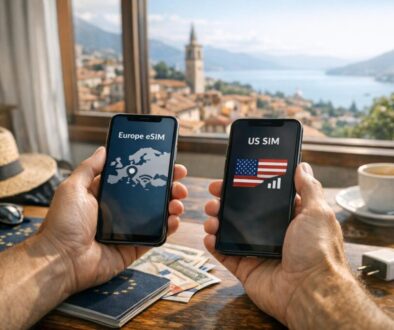
Dual SIM phones make it easy to keep your home number active while using travel data. If you’re unsure how that works, Roamzy’s guide on travel eSIM FAQs can help, and you can also check your device setup before you leave.
How to Decide Before Your Trip
If you want to know whether you need an eSIM for Europe, make the decision before you leave the U.S. or Australia. It’s much easier to compare options while you’re still on Wi-Fi at home than when you’re standing in an airport line.
1. Check your T-Mobile plan details
Look for the exact international roaming rules for Europe. Don’t rely on memory, old plan info, or assumptions from a friend’s experience.
2. Estimate your data needs
Ask yourself how you’ll use your phone:
- light messaging and email only
- navigation and bookings every day
- work calls, hotspot or video apps
- constant multi-country travel
The more you depend on mobile data, the more useful an eSIM for Europe becomes.
3. Compare total trip cost
Compare the cost of roaming on your plan against the cost of a travel eSIM. Make sure you’re comparing the full picture, not just the headline price.
4. Consider a backup connectivity option
Even if you plan to use T-Mobile roaming, many travellers prefer to have a second option ready. A travel eSIM for Europe can act as a backup if roaming proves slower, more limited, or less practical than expected.
Recommended Option for Europe Travellers
If you want a simple, travel-focused alternative to roaming, a Roamzy eSIM for Europe is worth considering. It’s especially useful if you want a separate data line for your trip, want to keep your main number active, or prefer to set up connectivity before leaving home.
Why a Roamzy Europe eSIM may be a smart add-on
Roamzy’s Europe option can make trip planning easier because you can compare it against your T-Mobile roaming benefits before you depart. That way, you’re not guessing whether roaming will be enough.
If you want a practical setup guide before installation, see how to install an eSIM on an Apple iPhone or how to install an eSIM on a Samsung smartphone.
Who it’s best for
- travellers who want more predictable data
- people visiting several European countries
- business travellers who need dependable mobile access
- families coordinating plans, tickets and messages
- Australian travellers comparing Telstra, Optus or Vodafone roaming with a travel eSIM
If you’re still deciding, it can also help to understand the basics of what an eSIM is and how it works before you buy.
FAQ: T-Mobile and eSIM for Europe
Will my T-Mobile phone work in Europe?
Usually yes, if your phone is unlocked and your plan supports international roaming in the countries you’re visiting. Check your plan details before you travel.
Can I use T-Mobile and an eSIM at the same time?
In many dual-SIM phones, yes. You can often keep your home number active while using the eSIM for data.
Is eSIM better than international roaming?
It depends on your trip. An eSIM for Europe is often better for predictable data, multi-country travel and avoiding roaming surprises.
Do I need a physical SIM if I already have T-Mobile?
No, not necessarily. If your phone supports eSIM, you may be able to keep your T-Mobile line active and add a travel eSIM digitally.
Is an eSIM useful for short trips?
Yes, especially if you need reliable data for navigation, airport transfers, or work. But if your roaming already covers what you need, it may not be necessary.
What should Australians check before using roaming overseas?
Australians should check their Telstra, Optus or Vodafone international roaming terms, compare them with an eSIM for Europe, and confirm their device is compatible.
Is an eSIM better for cruise passengers visiting Europe?
Often yes, because cruise itineraries can involve multiple countries and changing networks. A travel eSIM may be easier to manage than relying only on roaming.
Final Takeaway
If you have T-Mobile, you may already have some Europe coverage. But that does not automatically mean roaming is the most convenient or cost-effective solution. For many travellers, an eSIM for Europe is still the better way to get predictable data, keep their home number active, and avoid unpleasant surprises abroad.
The simplest approach is to check your current plan, estimate your data needs, and compare it with a travel eSIM before you go. If you want a Europe-focused option, Roamzy’s travel eSIM is a practical place to start.