eSIM Europe from USA for 30 Days: What You Need to Know
If you’re planning an eSIM Europe from USA for 30 days trip, the main goal is simple: stay connected across Europe without dealing with expensive roaming or the hassle of swapping physical SIM cards. For many U.S. travellers, a Europe eSIM is the easiest way to get mobile data ready before departure, so navigation, hotel check-ins, ride apps, and bank codes work as soon as you land.
Quick answer: a 30-day Europe eSIM is usually the best fit for a month-long trip if you want one plan that works across multiple countries, can be installed before you leave the USA, and keeps your U.S. number active on your regular SIM or eSIM line.
For a trip like this, Roamzy’s Europe eSIM plans are worth checking early, especially if you want a simple option designed for multi-country travel. If you need a month of data without worrying about roaming surprises, this is the kind of plan that can make travel much easier.

What Is an eSIM for Europe?
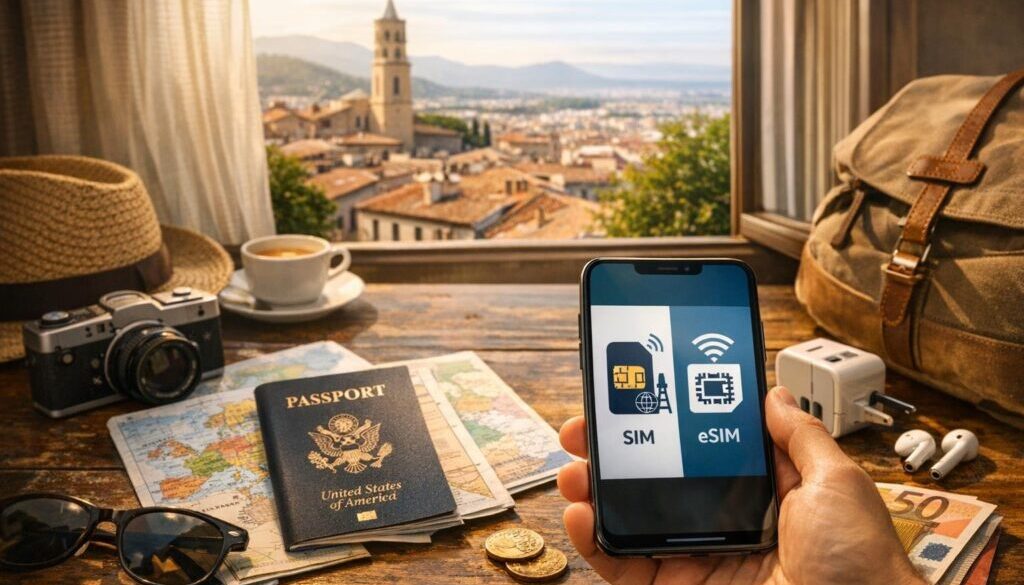
An eSIM is a digital SIM that lets you connect to mobile data without inserting a physical card. Instead of buying a SIM at the airport or in each country, you scan a QR code or follow activation steps from your provider and download the plan to your compatible phone.
For U.S. travellers, the big advantage is convenience. You can usually set up the eSIM before you fly, then switch on data when you arrive in Europe. That means you can open Google Maps at the airport, confirm your hotel, message family, and book transport without hunting for public Wi-Fi.
How an eSIM works
- You buy a travel data plan online.
- You install the eSIM on a compatible phone.
- You activate it at the right time, often when you land or just before departure.
- Your phone connects to a supported mobile network in Europe.
Why U.S. travellers use eSIMs abroad
- No need to visit a shop after a long flight.
- No physical SIM tray changes.
- Easy to manage a month-long trip.
- Useful for multi-country travel.
- Works well for maps, messaging, banking apps, and booking tools.
Why a 30-Day Europe eSIM Makes Sense for Travellers from the USA
A 30-day trip is one of the best use cases for a Europe eSIM. It’s long enough that paying daily roaming charges can become expensive, but short enough that a single travel plan is usually easier than setting up a local SIM in every country.
For many travellers, the real value is predictability. You know your data plan is ready before you leave the USA, so you can focus on the trip instead of worrying about connectivity. That’s especially helpful if you’re moving between cities, using trains, or crossing borders several times in one month.
| Option | Best for | Main drawback |
|---|---|---|
| Europe eSIM | Most 30-day travellers who want simple setup and multi-country data | Requires a compatible phone |
| Roaming from your U.S. carrier | Short trips or travellers who want to keep everything on one bill | Can be costly or limited depending on your plan |
| Local SIM in each country | Travellers staying mainly in one country for a long time | Less convenient for multi-country travel |
For a month in Europe, the eSIM often wins because it balances flexibility, speed, and convenience. You’re not locked into one country, and you don’t have to waste your first day abroad figuring out mobile service.
What to Check Before Buying an eSIM Europe Plan
Not every Europe plan is the same. Before you buy, make sure the plan actually fits your route, your phone, and how you use data on the road.
1. Country coverage
Check that the plan covers the countries on your itinerary. Europe travel can mean one country, three countries, or ten countries in a single trip. If your route includes multiple stops, confirm the plan works where you need it most.
2. Validity period
For this search, the key point is the 30-day window. Make sure the plan duration matches your trip length and understand when the clock starts. Some plans start on activation, while others start when the eSIM first connects to a network.
3. Data allowance
Think honestly about how you use your phone. If you only need maps, messaging, and light browsing, a smaller allowance may be enough. If you stream video, upload lots of photos, use hotspot, or work remotely, you’ll likely want more data.
4. Hotspot or tethering support
If you want to share your connection with a laptop, tablet, or travel companion, check whether hotspot use is allowed. This matters a lot for business travellers and digital nomads.
5. Device compatibility
Your phone must support eSIM and be unlocked. If your device is locked to a carrier, the eSIM may not work as expected. It’s worth checking this before you buy so you don’t end up with a plan you can’t use.
6. Activation timing
Some travellers install the eSIM at home in the USA but wait to activate it until they arrive. That’s often the safest approach for a 30-day trip because it protects your validity window.
How Much Data Do You Need for 30 Days in Europe?
Data needs vary a lot depending on your travel style. A traveller doing a city break will use data very differently from someone working remotely from cafés and trains.
| Usage style | Typical activities | Data need |
|---|---|---|
| Light user | Maps, messaging, email, occasional browsing | Lower data allowance may be enough |
| Moderate user | Maps, social media, photo uploads, video calls, travel apps | Mid-range plan is often better |
| Heavy user | Streaming, hotspot, remote work, frequent uploads, long video calls | Unlimited or high-data plan is usually safer |
For a 30-day Europe trip, many travellers underestimate how quickly data adds up. Navigation, restaurant searches, train apps, translation tools, and photo backups all use more data than people expect. If you know you’ll rely on your phone every day, it’s usually smarter to avoid cutting the allowance too close.
When to choose unlimited vs fixed data
- Choose fixed data if you’re mainly using maps, messaging, and light browsing.
- Choose unlimited or high-data if you work remotely, stream often, or use hotspot frequently.
- Choose a larger plan if you’re travelling with family and everyone uses one connection.
How to Set Up Your Europe eSIM Before Leaving the USA
One of the biggest advantages of a travel eSIM is that most of the setup can be done at home. That way, you’re not trying to read instructions in an airport queue after a long flight.
Step 1: Check phone compatibility
Make sure your phone supports eSIM and is unlocked. Most modern iPhones and many newer Android phones do, but you should always confirm before buying.
Step 2: Install the eSIM at home
Follow the provider’s setup instructions while you still have stable Wi-Fi in the USA. Installation is usually straightforward if you pay attention to the activation instructions.
Step 3: Keep the plan dormant until you need it
If your plan allows delayed activation, it’s often best to wait until you arrive in Europe. That way, you don’t waste any of the 30-day validity while you’re still at home.
Step 4: Keep your U.S. number active if needed
Many travellers keep their U.S. number on their primary SIM or eSIM line for calls, texts, and verification codes while using the Europe eSIM for data. This is one of the most practical setups for a month abroad.
For travellers who want an extra layer of protection while using public Wi-Fi in airports, hotels, and cafés, Roamzy Secure™ can also be a useful companion product. It’s not a replacement for mobile data, but it can help when you need to handle personal accounts on shared networks.
Ready to Stay Connected?
Compare Roamzy’s Europe eSIM options and choose a plan that suits your trip.
Common Mistakes to Avoid
A month in Europe is long enough for a few avoidable mistakes to become annoying and expensive. The good news is that most of them are easy to prevent.
Buying the wrong coverage
Always match the plan to your actual route. If your trip includes several countries, a multi-country Europe eSIM is usually better than a single-country option.
Activating too early
If the plan starts counting down from activation, turning it on before you leave the USA can waste valuable days. Read the activation instructions carefully.
Underestimating data use
Thirty days sounds like a long time, but data can disappear fast if you use maps all day, upload photos, or stream on hotel Wi-Fi less than expected.
Forgetting to check data settings
After arrival, make sure mobile data is turned on for the eSIM line and that data roaming settings are correct if required by the provider. A quick check can save a lot of frustration.
Which Roamzy Europe eSIM Option Is Best for a 30-Day Trip?
If you’re choosing a plan for a month in Europe, the best option is the one that matches three things: your route, your data use, and whether you want a simple install-before-you-fly setup.
For many U.S. travellers, the best fit is a Europe eSIM with 30-day validity that works across multiple countries. That keeps you connected from arrival to departure without changing SIM cards every time you move.
Here’s a simple way to decide:
- Choose a standard Europe eSIM if you want reliable travel data for maps, messaging, and daily use.
- Choose a higher-data plan if you’ll be online constantly or sharing data with another device.
- Choose unlimited data if you don’t want to track usage and expect heavier consumption.
The most important thing is not to buy based only on the headline price. A cheaper plan that runs out halfway through the trip can be more stressful than a slightly better plan that covers the full 30 days.
Roamzy Travel Tip™
💡 Roamzy Travel Tip™: install your eSIM while you’re still in the USA, but wait to turn on the travel line until you’ve landed and are ready to use it. That helps you avoid wasting validity time and gives you a smoother first hour in Europe.
Related Travel
If you’re planning a city-heavy European trip and like exploring on foot, you may also enjoy Walkables – Immersive Self Guide Audio Walking Tours From Around Europe. It’s a natural companion to independent travel when you want to see more without following a tour group.
FAQs About eSIM Europe from USA for 30 Days
Can I buy and install a Europe eSIM before leaving the USA?
Yes, in many cases you can buy and install it before departure. That’s usually the easiest option, especially if you want everything ready before your flight.
Will one Europe eSIM work in multiple countries?
Many Europe travel eSIMs are designed for multi-country use, but you should always check the coverage list before buying. Not every plan includes the same countries.
Can I keep my U.S. number while using a Europe eSIM?
Usually yes. Many travellers keep their U.S. line active for calls and verification messages while using the travel eSIM for data.
Do I need a passport or local ID to buy an eSIM?
Usually not for a standard online travel eSIM purchase, but provider rules can vary. Always check the seller’s current terms.
What happens if I run out of data before 30 days?
If the plan allows top-ups, you may be able to add more data. If not, you may need to buy a new plan. This is why estimating your usage before purchase matters.
Is a 30-day eSIM better than roaming with my U.S. carrier?
For many travellers, yes. A travel eSIM is often more predictable and easier to manage for a month abroad, but you should compare it with your carrier’s current international roaming terms before deciding.
Can I use hotspot with a Europe eSIM?
Sometimes, but it depends on the plan. If hotspot matters to you, check this before purchase rather than assuming it’s included.
Internal Links to Explore Next
- Europe eSIM plans
- Roamzy Connect homepage
- Travel connectivity blog
- How to set up an eSIM before travelling
- How much data do I need abroad?
- eSIM vs physical SIM for international travel
- Roaming vs travel eSIM
- How to check if your phone supports eSIM
- Europe travel connectivity guide
- Tips for using your phone in Europe
Ready to Stay Connected?
Compare Roamzy’s Europe eSIM options and choose a plan that suits your trip.
If you’re planning an eSIM Europe from USA for 30 days, the smart move is to choose a plan that matches your route, install it before you leave, and make sure the validity window lines up with your trip. That gives you one less thing to worry about once your flight lands and your itinerary gets moving.
For most travellers, the best setup is simple: a Europe eSIM for data, your U.S. number kept active for essential texts and calls, and a plan sized for the way you actually travel. If you want the convenience of having your connection sorted before departure, Roamzy’s Europe eSIM options are a practical place to start.