
If you already have a Telstra plan for Europe in mind, the big question is simple: do you actually need an eSIM as well? For many Australian travellers, Telstra roaming can keep a phone working overseas, but that does not always mean it is the easiest or most cost-effective way to stay connected across Europe.
The short answer is this: your Telstra plan for Europe may be enough for basic roaming, especially for short trips or light use, but a travel eSIM is often a smarter option if you want predictable data, easier multi-country travel, and less risk of bill shock. If you are comparing options before you fly, Roamzy Connect’s Europe travel eSIM range is worth checking alongside your Telstra roaming settings and current plan details.
This guide breaks down how Telstra roaming works, when an eSIM adds real value, and how to decide what fits your trip best.

Do You Need an eSIM If You Already Have a Telstra Plan?
Not always. Some travellers can get by with their Telstra service alone, especially if they only need occasional calls, texts, or light data access. But for many people, a Telstra plan for Europe is not the most flexible or predictable option once you leave Australia.
The key issue is not whether your phone can connect overseas. It is whether the roaming costs, inclusions, and convenience line up with how you actually travel.
What your Telstra plan may cover overseas
Depending on your Telstra plan and roaming settings, you may be able to:
- keep your Australian number active
- receive SMS verification codes
- make and receive calls
- use mobile data while overseas
But the exact inclusions vary, and international roaming terms can change. Before you rely on a Telstra plan for Europe, check Telstra’s current roaming information and your own plan details carefully.
Why Telstra coverage does not always mean cheap data
A phone that works in Europe is not the same as affordable travel data. Roaming can be convenient, but it may come with costs that build quickly if you use maps, messaging apps, ride-hailing, social media, or hotspot data.
That is why many Australian travellers keep their Telstra SIM active for number access and use a travel eSIM for data. It gives them a more balanced setup: Telstra stays available for important messages, while the eSIM handles everyday internet use.
When Telstra alone may be enough
Your Telstra plan for Europe may be enough if you:
- are away for only a few days
- rarely use mobile data
- mainly rely on Wi-Fi at hotels and cafes
- only need your Australian number for essential calls or texts
- do not want to change your phone setup before departure
If that sounds like you, roaming may be workable. But if you are travelling across several countries, using data heavily, or trying to keep costs predictable, an eSIM is usually worth serious consideration.
How Telstra Roaming Works in Europe
International roaming is the easiest way to keep using your Australian SIM overseas, but it is important to understand the trade-offs before you rely on a Telstra plan for Europe.
International roaming basics
Roaming lets your phone connect to overseas partner networks while keeping your Australian mobile number. In practical terms, that means you can often keep receiving calls and texts and may be able to use data without swapping SIMs.
That convenience is the main reason many Australians keep roaming turned on. The downside is that roaming costs and inclusions can be less transparent than a prepaid travel data solution.
What to check before you travel
Before you leave Australia, review these items in your Telstra account and phone settings:
- Does your plan include international roaming?
- Which countries are included? Europe is not always treated as one single roaming region.
- What are the data, call, and text charges?
- Is roaming automatically enabled or do you need to activate it?
- Are there fair use limits or daily caps?
- Will your phone receive SMS while roaming?
For extra trip planning support, Australian travellers should also review Smartraveller before heading overseas, especially if they are travelling through multiple countries or moving between cities by train, ferry, or cruise.
The hidden costs to watch for
The hidden cost with a Telstra plan for Europe is not always the headline roaming price. It is the way normal travel behaviour adds up:
- maps running in the background
- photo uploads and cloud backups
- video calls home
- ride-share apps
- restaurant searches and bookings
- constant messaging and social media use
If you use your phone the way most travellers do, roaming can become expensive fast. That is why many people compare roaming against a travel eSIM before they leave Australia.
What an eSIM Adds for Europe Travel
An eSIM can be a useful alternative or companion to your Telstra plan for Europe. For many Australians, it solves the main problem with roaming: unpredictable data costs.
Why travellers use eSIMs
Travel eSIMs are popular because they can be set up before departure and used as soon as you land. That means less time searching for airport SIM shops and less reliance on expensive roaming for day-one navigation.
A travel eSIM is especially helpful if you want to:
- buy data before leaving Australia
- avoid swapping physical SIM cards
- keep your Telstra number active for calls and texts
- use maps, transport apps, and messaging on arrival
- move between multiple countries without buying a new SIM in each one
Benefits of keeping your Telstra SIM active
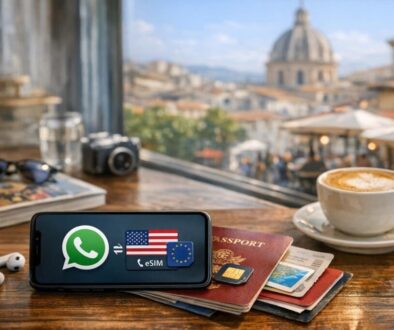
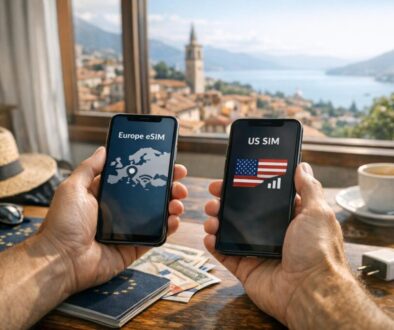
One of the best setups for Australian travellers is to keep the Telstra SIM in the phone and add an eSIM for data. That way, you may still receive important SMS messages on your Australian number while using the eSIM for travel internet.
This dual-SIM approach is practical for:
- banking and security codes
- calls from family, work, or accommodation providers
- travellers who do not want to miss messages from home
If you want to understand the technical setup better, Roamzy Connect also has guides on installing an eSIM on an Apple iPhone and installing an eSIM on a Samsung smartphone.
Why eSIMs are useful across multiple European countries
Europe travel rarely stays in one country. A family might land in France, take a train to Switzerland, then fly to Italy. A couple on a longer holiday might add Spain, Portugal, or Germany.
That is where an eSIM can be more convenient than a Telstra plan for Europe. Instead of thinking about roaming rules for every stop, you can use one travel data plan across your trip, provided it covers the countries on your itinerary. Always check the current plan details before buying.
Telstra Plan vs Europe eSIM: Which Is Better?
There is no single answer for every traveller. The better choice depends on how long you are away, how much data you use, and how many countries you plan to visit.
| Travel scenario | Telstra plan for Europe | Europe eSIM |
|---|---|---|
| Short trip | Can be convenient for light use and keeping your number active | Useful if you want predictable data from day one |
| Long trip | Can become costly or harder to manage | Often more practical for ongoing travel data |
| Heavy data use | May be expensive if you stream, navigate, or hotspot often | Usually a better fit for regular mobile data use |
| Multi-country travel | May require more checking of roaming coverage and charges | Often simpler if one plan covers several countries |
Best for short trips
If you are away for just a weekend or a short business trip, your Telstra plan for Europe may be enough. The convenience of not changing settings may outweigh the cost if you are only checking maps, emails, and messages occasionally.
Best for long trips
For trips lasting longer than a few days, a travel eSIM often becomes more practical. It helps you control data spending and gives you a clearer idea of what your trip connectivity will cost before you leave Australia.
Best for heavy data users
If you use navigation all day, upload photos regularly, make video calls, or work remotely on the road, roaming through a Telstra plan for Europe can be hard to justify. A travel eSIM is usually the better fit for heavy use.
Best for multi-country travel
Travellers heading through several European countries often prefer an eSIM because it reduces the hassle of country-by-country roaming checks. That is especially useful on longer itineraries, rail trips, cruises, and backpacking routes.
How to Decide What’s Right for You
If you are trying to choose between your Telstra plan for Europe and a travel eSIM, ask yourself a few practical questions before buying anything.
Questions to ask before buying
- How long will I be overseas?
- Will I need mobile data every day?
- Am I visiting one country or several?
- Do I need to keep my Australian number active?
- Will I rely on SMS verification codes from banks or services?
- Is my phone eSIM-compatible?
- Do I want to manage roaming settings while travelling?
If you are unsure about compatibility, check your device before you go. Apple and Samsung both provide official support pages for eSIM-capable devices and setup steps, and your phone model matters. A quick check before departure can save a lot of stress later.
When to rely on roaming
Rely on roaming from your Telstra plan for Europe if:
- your trip is short
- you use very little data
- you are comfortable with the roaming pricing
- you only need a backup connection
When to choose an eSIM instead
Choose a travel eSIM if:
- you want more predictable data costs
- you are travelling through multiple countries
- you need maps, transport apps, and messaging throughout the day
- you want to keep Telstra active for your Australian number while using separate data
- you are trying to avoid roaming bill shock
Recommended Option for Europe Connectivity
For many Australian travellers, the best setup is not either-or. It is a combination: keep your Telstra SIM active for your number, and use a travel eSIM for everyday data.
That is why a Europe travel eSIM is often a practical alternative to relying only on a Telstra plan for Europe. It lets you stay connected with less guesswork, especially when you are moving across cities or countries.
Why a travel eSIM can be a practical alternative
A travel eSIM can help simplify your trip because it:
- separates data use from your main Australian mobile service
- reduces dependence on roaming
- can be set up before you leave
- is useful for navigation on arrival
- works well for travellers who want a low-fuss connectivity setup
If you want to compare options, start with Roamzy Connect’s Europe eSIM and the broader best eSIM for Europe guide. Check the current plan details before purchasing so you can match the product to your itinerary.
How Roamzy Connect can help
Roamzy Connect helps Australian travellers choose the right travel connectivity setup before they depart. If your Telstra plan for Europe is not the right fit, a Europe travel eSIM may be the simpler option for data while keeping your Australian number available on your Telstra SIM.
If you are still deciding, the safest approach is to compare your Telstra roaming terms with a travel eSIM plan that matches your route and usage. That way you can avoid unnecessary costs and travel with fewer connectivity surprises.
FAQs
Can I use Telstra and an eSIM at the same time?
Yes, on many dual-SIM compatible phones you can keep Telstra active for calls, texts, or SMS codes while using an eSIM for data. Check your phone model and settings before you travel.
Will my phone support an eSIM?
Many newer iPhone and Samsung models support eSIM, but compatibility depends on the exact device and whether it is unlocked. Check your handset specifications before buying a travel eSIM.
Can I keep my Australian number while using a Europe eSIM?
Usually yes, if you keep your Telstra SIM active in your phone. That can help you receive important calls and SMS messages while using the eSIM for data.
Is roaming or eSIM cheaper in Europe?
It depends on your Telstra plan, your data use, and the eSIM you choose. In many cases, a travel eSIM is more predictable for data costs, while roaming may be simpler for very light use.
Do I need to unlock my phone to use an eSIM?
Your phone generally needs to be eSIM-compatible and not locked to a single carrier. If you are not sure, check with your telco or device settings before you leave Australia.
Does Telstra roaming work in every European country?
Not necessarily in the same way everywhere. European roaming coverage can vary by country and plan, so you should check Telstra’s current roaming information for the specific destinations on your itinerary.
What type of traveller benefits most from an eSIM?
Travellers who use a lot of data, visit multiple countries, or want to keep their Australian number active usually get the most value from an eSIM.
Can I still receive bank SMS codes overseas?
Often yes, if your Telstra SIM remains active and your phone is set up correctly. If banking access matters to you, test your setup before departure.
If you are weighing up a Telstra plan for Europe against a travel eSIM, the best decision comes down to convenience, cost control, and how much data you expect to use. For many Australians, roaming is fine in a pinch, but a Europe travel eSIM is usually the smarter option for day-to-day travel connectivity.