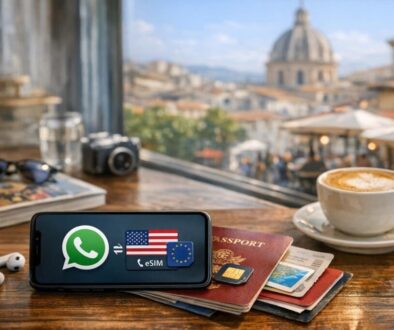

If you’re heading overseas and wondering whether your Telstra plan for Europe will keep you connected, you’re not alone. Plenty of Australian travellers assume their normal mobile plan will just work overseas, only to find roaming costs, limits, or setup issues when they land.
The short answer is: a Telstra plan for Europe may work in some form, but that doesn’t automatically mean it’s the most practical or cost-effective option for your trip. For many travellers, a Europe travel eSIM is easier to manage, especially if you want predictable data use across multiple countries.
If you’re comparing options, Roamzy Connect offers Europe-compatible travel eSIMs that may suit travellers who want to avoid roaming surprises. Before you buy anything, it’s worth checking the current plan details for your Telstra service and comparing them with a travel eSIM option such as Roamzy’s Europe eSIM.

Can You Use a Telstra Plan in Europe?
In many cases, yes — but the details matter. A Telstra plan for Europe may allow roaming depending on your plan type, your destination, and whether you’ve enabled international roaming or an add-on. Some travellers can use voice, SMS, and data overseas, while others need to purchase a roaming pack or pay standard international roaming charges.
The key point is that “it works” is not the same as “it’s good value.” Before relying on a Telstra plan for Europe, check:
- whether your plan supports international roaming
- which European destinations are covered
- how data, calls, and texts are charged
- whether any roaming pack or travel pass is required
- if there are speed, data, or usage limits
What Telstra roaming typically means
Telstra international roaming usually means your Australian service can connect to overseas partner networks, so your phone may still work without changing your number. That’s convenient for calls, SMS, and basic data use, especially if you need to stay reachable on your usual Australian number.
However, convenience can come at a cost. Roaming is often best suited to light use, emergency access, or short business trips, not heavy streaming, navigation, video calls, or hotspot use.
Which parts may work overseas and what limits apply
Depending on your Telstra setup, you may be able to use:
- calls
- SMS
- mobile data
But each of those may be charged differently. A Telstra plan for Europe might also have fair use or destination-specific restrictions. Because roaming terms can change, always verify the current details directly with Telstra before you travel.
For official pre-trip advice, Smartraveller recommends checking your phone and connectivity needs before departure, especially if you’ll need to contact family, airlines, or local services while overseas. See the Australian Government’s Smartraveller travel advice for general travel planning guidance.
Is a Telstra Plan Enough for Europe?
Sometimes a Telstra plan for Europe is enough for short, low-data trips. But “enough” depends on how you travel.
When roaming may be convenient
A Telstra plan for Europe may suit you if you:
- only need occasional access to calls and texts
- are travelling for a very short time
- need to keep your Australian number active
- don’t mind paying more for simplicity
If you’re on a business trip and need to stay on your regular number, roaming may feel straightforward. You don’t need to install anything new, and there’s no need to manage a separate travel SIM.
When it may be expensive or restrictive
Roaming becomes less attractive when your trip includes:
- multiple European countries
- daily map use and ride-share apps
- video calls or work emails on the move
- family travel with several devices
- longer stays where data use adds up quickly
For those trips, a Telstra plan for Europe can become expensive or difficult to predict. That’s where a travel eSIM usually makes more sense.
What Is an eSIM for Europe?
An eSIM for Europe is a digital travel SIM you install on a compatible phone. Instead of swapping physical SIM cards, you download the travel plan to your device and activate it when you’re ready.
This is one reason many travellers prefer an eSIM over a Telstra plan for Europe: it separates travel data from your Australian mobile service, which can make costs and setup easier to manage.
How a travel eSIM works
In simple terms, a travel eSIM lets you use mobile data overseas on a separate profile while keeping your Telstra SIM active for calls, texts, or verification codes if needed. On many phones, your Australian SIM and travel eSIM can work side by side, though exact behaviour depends on the device.
Before buying, check whether your phone supports eSIM. If you’re using a Samsung device, Roamzy has a helpful guide on installing an eSIM on a Samsung smartphone, and iPhone users can follow the guide for installing an eSIM on an Apple iPhone.
Why travellers choose eSIMs over roaming
Travellers often choose an eSIM because it can offer:
- more predictable data use
- easier multi-country travel
- less reliance on roaming settings
- faster setup before or after departure
- better control over mobile data spending
That doesn’t automatically make an eSIM the right answer for everyone, but it does make it a strong alternative to a Telstra plan for Europe.
Telstra Roaming vs Europe eSIM: Key Differences
If you’re deciding between your Telstra plan for Europe and a travel eSIM, it helps to compare the practical differences rather than focusing on the brand alone.
| Feature | Telstra roaming | Europe eSIM |
|---|---|---|
| Cost | May be charged per day, per use, or via an add-on depending on your Telstra setup | Usually prepaid or fixed plan-based pricing, depending on the provider |
| Data allowance | Varies by plan and roaming option | Varies by eSIM plan; check before purchase |
| Setup | Often simpler if you keep using your existing SIM | Requires eSIM installation, but can usually be done before travel |
| Coverage | Depends on Telstra roaming partners and destination settings | Depends on the eSIM’s supported destinations and network partners |
| Best for | Light use, short trips, staying on your Australian number | Travellers wanting data control, flexibility, and multi-country use |
Cost
The biggest question for any Telstra plan for Europe is usually cost. Roaming can be convenient, but the price can rise quickly if you use data like you do at home. A travel eSIM is often easier to budget for because you know what you’re buying upfront.
Data allowance
Data is where many travellers run into trouble. Navigation, social media, hotel bookings, translation apps, and photo uploads all use data in the background. If your Telstra plan for Europe has limited roaming data or higher per-use charges, a travel eSIM may be a better fit.
Ease of setup
Keeping your Telstra SIM active can feel simpler at first, but roaming settings sometimes catch travellers out. A travel eSIM needs installation, yet once it’s set up it can be straightforward to use. Many Australians prefer to install it at home before they fly.
Coverage and flexibility
Europe travel often means crossing borders. A Telstra plan for Europe may work in selected destinations, but coverage and conditions can vary. A Europe eSIM can be more flexible if the plan is built for multi-country travel. If that’s your style of trip, compare your roaming options with Roamzy’s best eSIM for Europe guide before deciding.
When Should You Choose an eSIM Instead of Roaming?
For many Australians, the better question isn’t whether a Telstra plan for Europe works — it’s whether it’s the smartest choice for the way they travel.
Short trips
If your trip is very short and you only need light access, roaming may be acceptable. But even on a quick trip, a travel eSIM can still be worth it if you expect to use maps, rideshare apps, or messaging heavily.
Heavy data use
If you plan to use your phone a lot, a Telstra plan for Europe may become costly fast. A Europe eSIM is often better for:
- Google Maps and navigation
- streaming music
- video calls
- work email and document uploads
- frequent social media use
Multi-country Europe travel
Many Australian travellers visit several countries on one trip. In that case, switching roaming conditions every time you cross a border can be frustrating. A travel eSIM built for Europe is often easier than relying on one Telstra plan for Europe across the whole trip.
Avoiding bill shock
Roaming bill shock is a common concern for a reason. Even careful users can rack up charges through background data, app updates, or accidental usage. If you want more control, a travel eSIM is usually the safer option.
What to Check Before You Travel
Before you decide on a Telstra plan for Europe or an eSIM, spend a few minutes checking the basics. This can save a lot of stress later.
Device eSIM compatibility
Not every phone supports eSIM. Check your handset settings or manufacturer support pages before you buy. If your device is compatible, you may be able to run your Telstra SIM and a travel eSIM together.
Telstra roaming settings
If you want to use your Telstra plan for Europe, make sure international roaming is enabled and that you understand what will be charged. Don’t wait until you land to work this out.
Destination coverage
Europe is not one single roaming zone in practice. Coverage can vary by country and by provider arrangement. Confirm that your destination is included before travelling.
Activation timing
Some travellers prefer to activate a travel eSIM just before departure, while others set it up at home and switch it on when they land. Either way, don’t leave activation until the airport if you can avoid it.
Recommended Option for Europe Travel
If you want to keep your Australian number available but reduce the risk of roaming surprises, a travel eSIM is often the more flexible choice. For many travellers, it offers a better balance between convenience, predictable data use, and control.
That’s why a Telstra plan for Europe is best treated as one option — not the default answer. If you only need light use, roaming may be enough. If you want clearer data planning, a Europe eSIM is usually easier to live with.
Roamzy Connect’s Europe-compatible travel eSIM may suit travellers looking for a simple setup before they fly. Check the current plan details and destination coverage on the product page: Europe eSIM.
If you want more general help choosing the right option, you can also browse the Roamzy Connect home page at Roamzy Connect.
FAQ: Telstra Plan for Europe
Can I use my Telstra plan for Europe?
Sometimes yes, but it depends on your plan, roaming settings, and destination. Check Telstra’s current international roaming details before you travel.
Does Telstra include Europe roaming?
Not all Telstra plans include the same roaming access. Some users may need a roaming add-on or may be charged separately. Verify the latest terms directly with Telstra.
Is a Telstra plan for Europe cheaper than an eSIM?
Not always. Roaming can be convenient, but an eSIM often gives you more predictable upfront pricing. Compare current options before buying.
Do I need to remove my Telstra SIM to use an eSIM?
Usually no. Many compatible phones can use an eSIM alongside your physical SIM, which lets you keep your Telstra number active.
Will an eSIM work across multiple European countries?
Often yes, if the plan is designed for Europe travel. Always check the destination list before purchase.
Is a Telstra plan for Europe good for short trips?
It can be, especially if you only need occasional access. But if you expect to use a lot of data, a travel eSIM may still be better value.
What should I check before leaving Australia?
Check your phone’s eSIM compatibility, Telstra roaming settings, destination coverage, and when to activate your travel data plan.
What are the risks of relying only on roaming?
The main risks are unexpected charges, limited data, and confusing settings when you arrive. That’s why many travellers prefer a travel eSIM for Europe.
If you’re still comparing your options, start with your current Telstra plan for Europe, then compare it against a dedicated travel eSIM. For many Australian travellers, that quick comparison is enough to make the decision clear.